April 21

The country is playing a numbers game and the numbers are making my head spin. 87,022 cases in England, 114,217 cases in the UK, 510 healthy volunteers for vaccine trials. 16,509 UK deaths. These are the numbers in the face of which I am helpless. The numbers I concentrate on are the ones I can do something about and need to know in order to to keep us safe.One thing I need to know is how long Covid-19 lives when it is no longer in its human host.

Take paper, for example. We haven’t opened our post for weeks. It falls through the letterbox and lies on the floor in heaps, while we pretend we haven’t seen it. I admit I’m given to not opening post at the best of times and this, being the worst of times, gives me the perfect excuse. However, suppose there’s a Premium Bond win in the pile or a summons we haven’t seen for a bill we haven’t paid because we haven’t opened the post. I decide to find out for certain how long we have to leave it before it is safe:

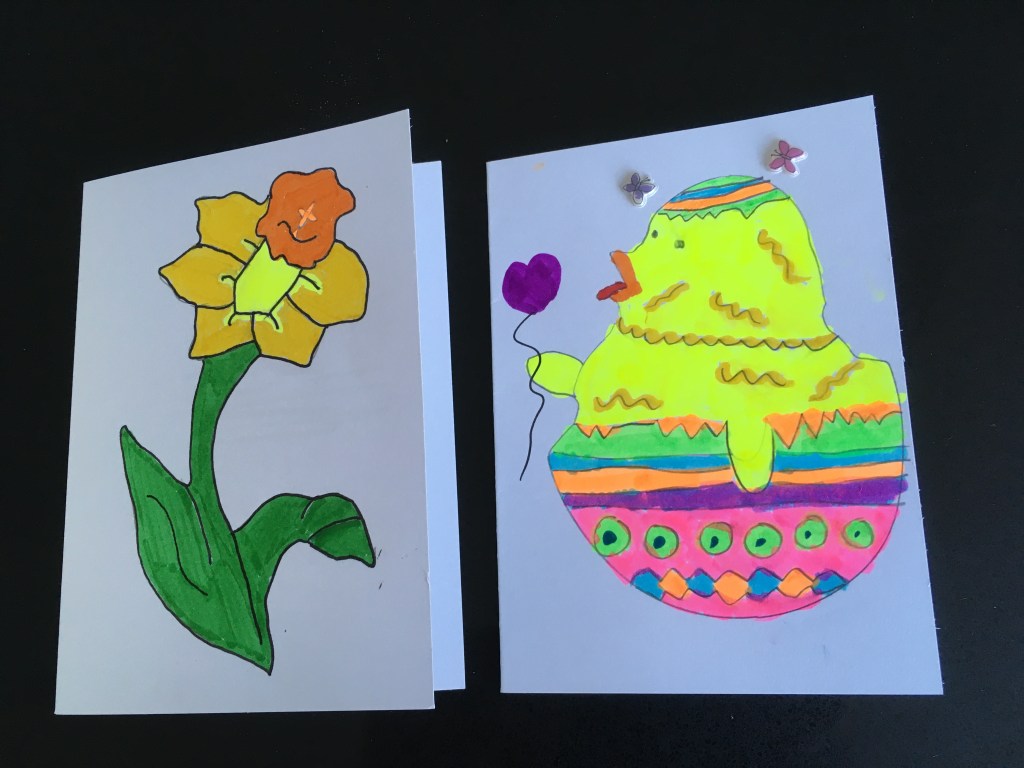
“Some strains of Coronavirus live for only a few minutes on paper. Others can live for up to five days”. So I now have to sort the post we haven’t opened for weeks from the post we haven’t opened for days. I make separate piles and open the oldest: One Premium Bond for £25. How come it’s always £25 , charity appeals (That takes care of the Premium Bond), bills, of course. The best things we find are two home- made Easter cards from Trisha and Tod’s grand-daughters. How sad that they’re young enough to look forward to some acknowledgement of their hard work and thoughtfulness and we’re old enough to be protecting ourselves so carefully as to be unaware of what they’d sent. I email our belated thanks and they seem to accept the fact that, though Easter, which we usually spend with them, was 12 days ago, we’re delighted to hear from them at any time.
Milk cartons harbour Coronavirus for 2 to 3 days, as do lift buttons and the outside of fridges. (What about the inside of fridges?). For cardboard boxes, it’s 24 hours (72 some say), drink cans 2-8 hours, mugs, plates and doorknobs 5 days and fruit and vegetables don’t “seem” to retain the virus at all, though we are advised to wash them thoroughly and I have heard it’s not a great idea to disinfect apples and tangerines with alcohol wipe, as I have been doing. Apparently that particular kind of alcohol is better not ingested.

However, all this is academic, since nothing gets through our front door without being sanitised so thoroughly I’ve occasionally rubbed away cooking instructions on the ready- meals we are eating increasingly often.

Radio and television spew out increasing numbers of numbers to buzz in our heads. It’s all the journalists have to hold on to and it becomes a mantra for listeners and viewers to repeat to themselves and one another: 400,000 gowns trapped in Turkey, 3 more weeks of Lockdown, 18 months for a vaccine, 2 years before it’s widely available, 12 months “shielding” for people over 70. Of course, none of these is necessarily accurate. We are 100 per cent certain of nothing.
April 19

I’m missing the city below us.

My husband and I are city-dwellers very much by choice . We love the buzz London has delivered over the past years. (Whether it will continue post- Brexit and post -Covid is impossible to imagine). We have led our social lives going to the pictures, sampling new restaurants and re-visiting old favourites, meeting friends for jolly Sunday breakfasts in a nearby hotel and attending galleries, museums and theatres far less often than our country friends, who don’t have them on their doorstep. We appreciate being able to walk home from The Royal Opera House while frantic out-of-towners queue for taxis in the rain. London’s beautiful parks are so precious to us, we get irritated when they’re appropriated for cycle races and art fairs. We don’t have a car, since most places we visit are within walking distance and, for those that are not, we have generous, motorised friends who give us lifts.

Being in the epicentre of Britain’s fight with this hideous disease – 3,522 deaths in London hospitals so far – we have chosen to take this Lockdown hyper-seriously. We are not going out at all, we are exercising solely on our terrace or indoors and relying completely on food deliveries. We haven’t seen another soul, other than on a screen, since March 12th.

Friends, walking and ethnic food are highest on my miss-list. Culture is available on TV and, though it’s not the same as experiencing plays, concerts or opera live, the Arts have offered us all a feast since Covid -19 hit.

There’s one thing, though, that is, by its very nature, unavailable at home and that’s the magic of Serendipity. Out walking the streets as we used to, we might come upon a mass ballroom-dancing session on the Plaza outside the South Bank, or a Klesmer band playing on the bandstand in Regents Park. Maybe we’d drop in to the annual food festival in the grounds of our local church or marvel at the apples growing on a tree in the middle of Soho.We’d spot the familiar posse of large, leather-clad, gay men sipping coffee on the street and coo-ing over their assortment of tiny ,white, fluffy dogs. And here comes the local tailor, always immaculately turned out in a suit, waistcoat and tie, or the man who must, surely, be a jazz musician, dressed in a grey pin-striped frock -coat with a matching Borsalino. We haven’t seen the elderly woman with grey and fuschia-pink plaits down to her knees, for some time. It’s Serendipity who or what turns up in the pageant of the city.

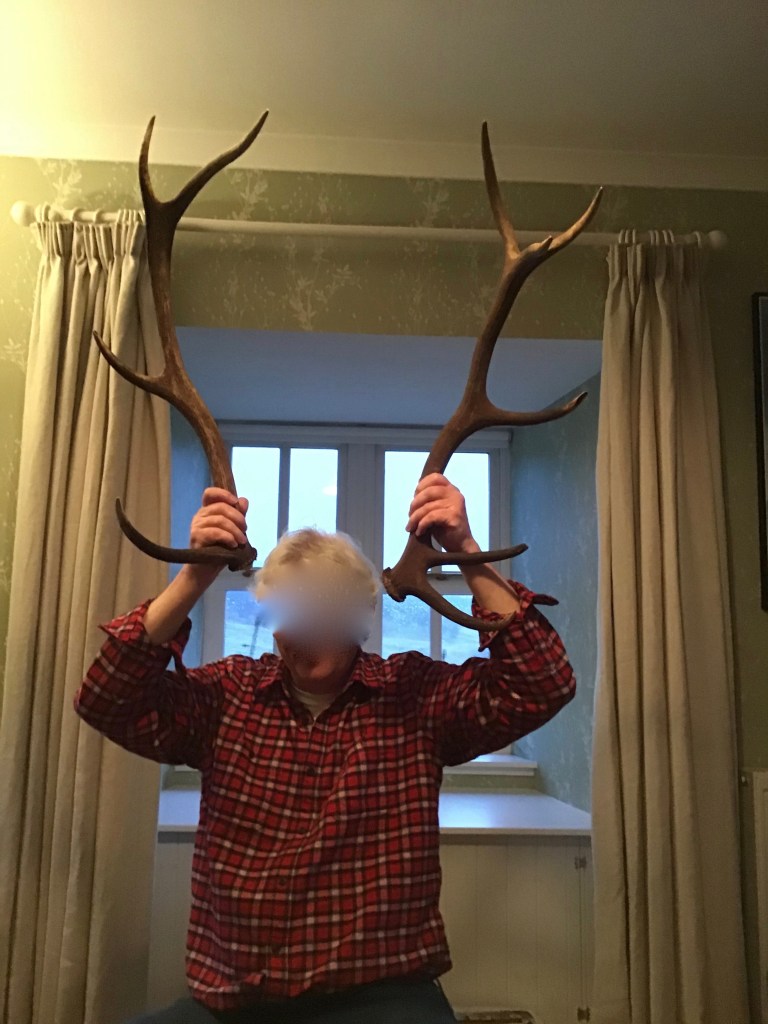
It’s that Serendipity I’m missing as we pre-plan our day’s meals, decide when we will exercise, when to clean the house and what to watch on TV. The spur-of-the-moment moment is no more and I envy those of our friends still experiencing them. Here’s Tod, for instance, still accidentally locked down in the Scottish Highlands, relishing a serendipitous experience:

Don’t worry, he didn’t kill anything.The deer shed them annually.


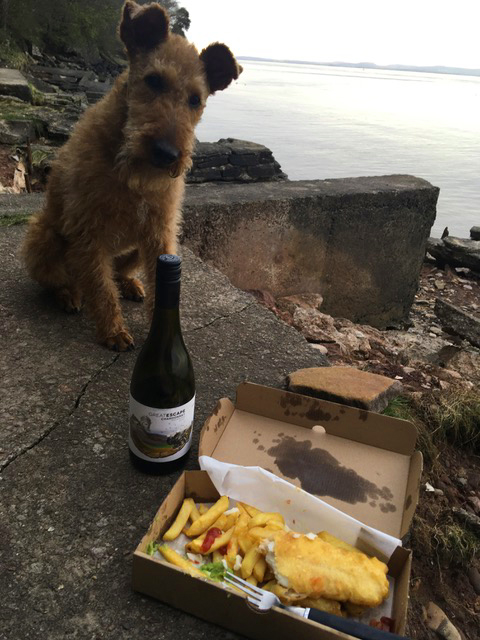
And here’s the serendipitous dinner another couple of friends never knew they were going to have, until they came upon a new takeaway chippy during their daily exercise.

When Lockdown is over and we are free to go where and do what we choose, constrained only by our implacable diaries filled with their unmissable appointments, I vow to savour the impromptu and remember how much I missed it.

April 19

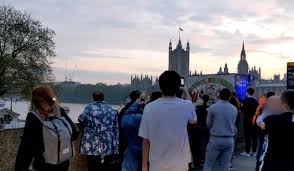
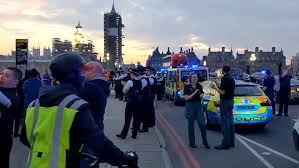
On the day Lockdown was extended for another three weeks (at least), crowds of people left their homes and crammed together, barely inches from one another, let alone feet, on Westminster Bridge, to clap for the carers – many of whom will shortly be looking after them when they end up in hospital. I discover I’m becoming judgemental and dogmatic as the lockdown goes on, pronouncing on the actions of people about whom I know absolutely nothing and laying down the law to the government as to how they should be handling this crisis, by shouting at the radio and television.


**********************

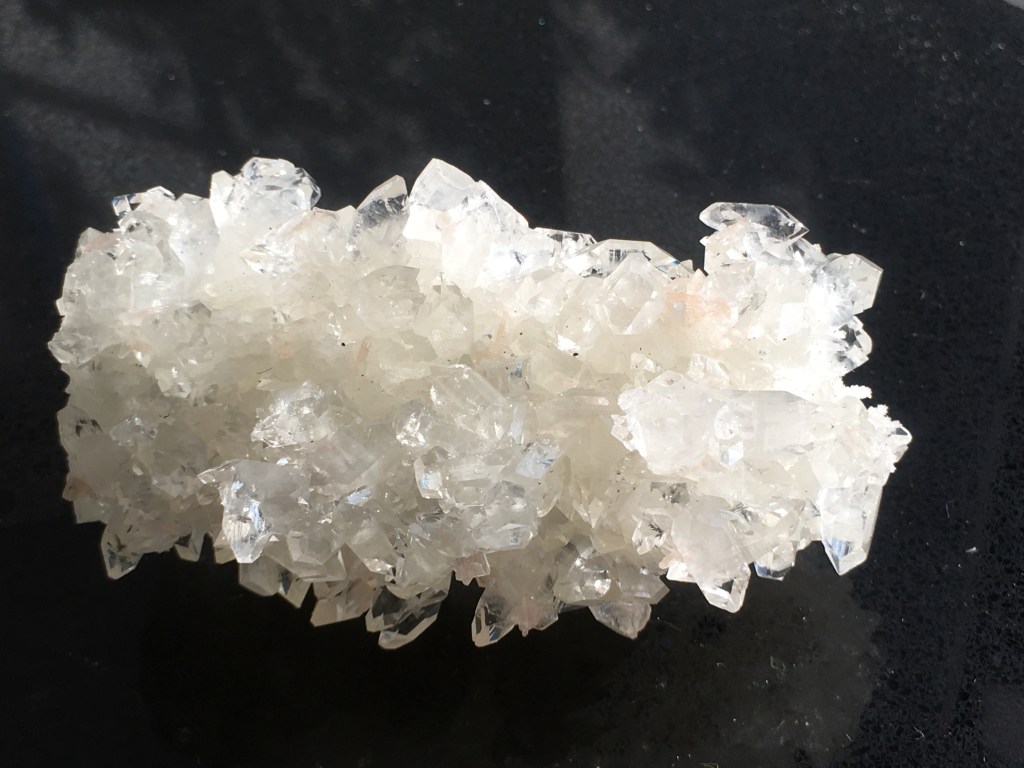
My husband gave me a most beautiful anniversary present. It was our Crystal anniversary and he found this wonderful piece of Apophyllite, Stilbite and Chalcedony.

Apophylitte is supposed to “help develop faith and trust in the Divine”, Stilbite “emanates unceasing joy”, as well as helping one make the right choices and sleep better. Chalcedony absorbs negative energy and promotes harmony and clarity – so it looks as though I’m well- equipped to get through the next period of Lockdown. I’m particularly keen on the Stillbite. We could all do with some unceasing joy.

*******************

London’s Mayor, Saddiq Khan, has said he wants everyone in London to wear face masks when we are finally allowed out of Lockdown. Trouble is, there’s too much choice. Do we buy the flimsy white papery ones? But shouldn’t they be three-ply, or is it 2-ply? Oughtn’t they to have a valve? And, if they do have a valve, what’s it for and do we have to change a filter? Or should we go for one of the sinister, black, gas-mask variety that make people look like Darth Vader? And is it true that they’re only useful if you’ve got it? Or is it true that it might protect you if you haven’t, but only a bit? Who knows? The only absolute certainty is that, by the time we have to have them, there won’t be any.

**********************

After much angst, we decide to risk a takeaway meal. That momentous descision having been made, brings an avalanche of others in its wake. “Deliveroo”?, or not to “Deliveroo”? Or should it be the new ‘Supper’, which boasts only the most prestigious restaurants on its list? ‘Deliveroo’, we reason, has been doing it longest, so is the most experienced, which might make it safer. On the other hand, its bags have also been around longer so might be less hygienic. But ‘Supper’ is so new, maybe it doesn’t yet know what precautions to take. On the other hand, its bags are newer and it seems to send its drivers out in little cars, which might be more hygienic than “Deliveroo’s” motor cycle gear. Back and forth we go before eventually deciding, after much rational argument and employment of the finest logical deductions, on “Supper” – Smarter logo probably swayed it.

We order a divine feast at one of our favourite restaurants featuring Rotabaki Cuisine. I’ve never really known what that is, only that its flavours are ones I can never hope to reproduce in my own kitchen. We select about ten little dishes of exquisitely spiced delicacies.

Given that it’s such a special occasion, we both put on actual clothes – that’s to say, ones that don’t have elastic round the waist – and set the table with new Lockdown chic.

The doorbell rings and mayhem breaks loose. We shout through the intercom for the delivery person to come up to the sixth floor and we wait, peering through the spy- hole to see when he arrives.We are still waiting when he rings the bell again, having gone back downstairs, unable to find us. He comes back up, we wait for him to leave, then open the door. Outside are two plastic carrier bags filled with innumerable cardboard cartons of food. First, I sanitise the bags, then each carton in turn, handing them to my husband, who can’t work out whether, at the moment of receiving them, he should be taking off his surgical gloves or keeping them on, so stands, paralysed, by the door. We take the many sanitised boxes into the kitchen, where I re-sanitise them as I can’t remember which ones he carried and whether he had his gloves on or off. Finally, we plate up our dinner, look appreciatively at the first meal we haven’t cooked for four weeks, raise a glass to each other and begin on the divine, celebratory, and very expensive feast.

The food is, of course, by this time, cold.

APRIL 17

Today is our Wedding Anniversary

If we have to stay locked down for another eighteen months until there is a vaccine, I can’t think of anyone I’d rather spend this time with than my beloved husband.

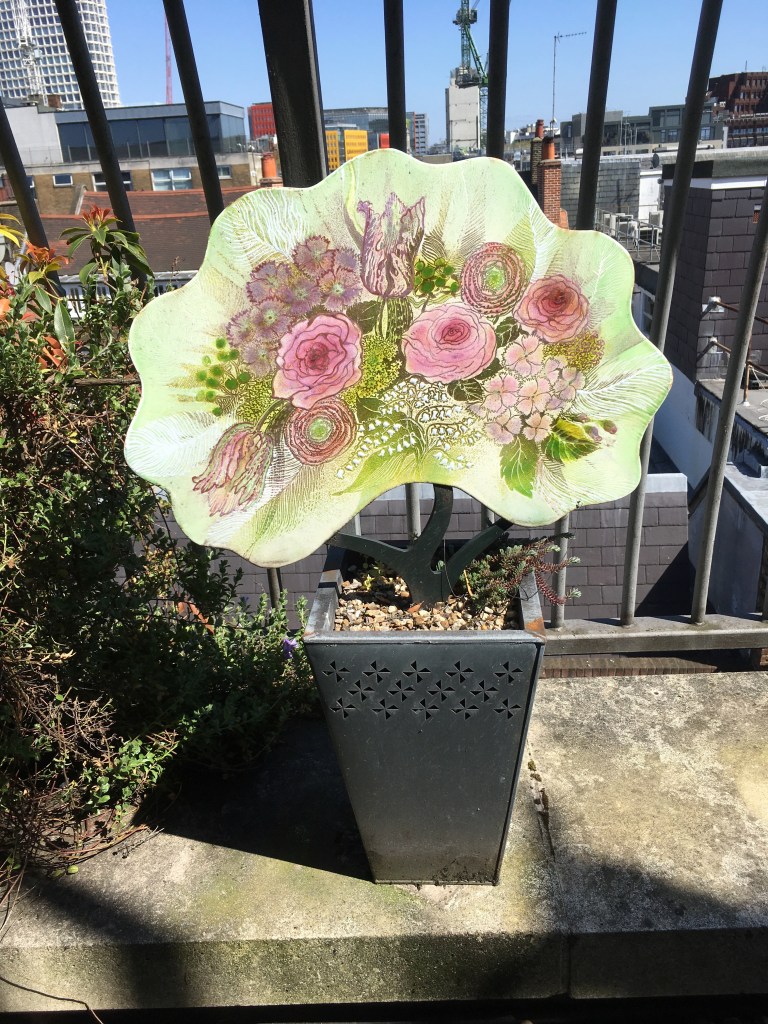
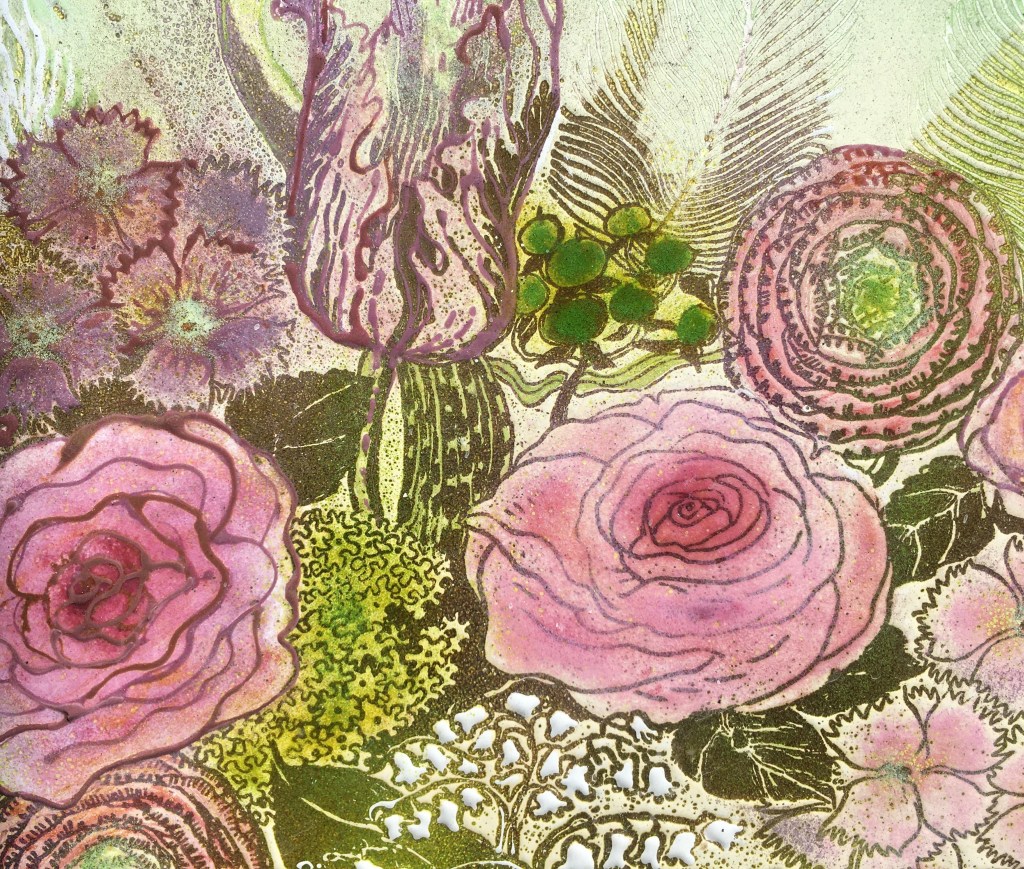
There are reminders of our wedding all over our apartment, which is one of the reasons we’re glad to be locked down at home. The one I see most often, because it sits outside the kitchen window, is this gift from a couple of our guests, an exquisite reminder of our wedding flowers in vitreous enamel by textile designer, Janet Haigh, who also works across different materials and media.

Lily-Of-The-Vally were the flowers in my wedding bouquet and also in the huge bunch that Tricia and Tod brought, secretly, to the hotel where we were staying and had placed beside the bed so we were enveloped in their glorious scent as we collapsed after the celebrations and when we woke on our first morning as a married couple.

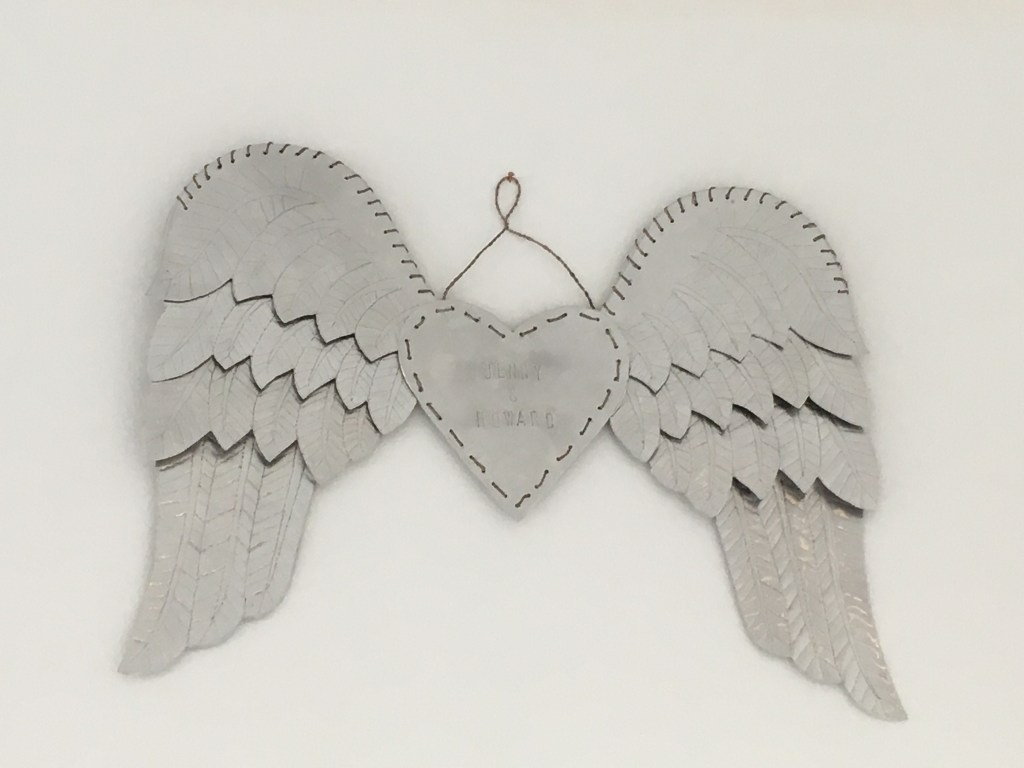
We were given another Janet Haigh work on our first Anniversary – traditionally commemorated by articles made from tin. Loving this, we wanted to display it to its best advantage and I even managed to contact the artist to see what kind of frame would suit it best. “Oh just bung it on a nail”, was her reply – and I do believe one should always pay attention to the vision of the artist.

Any marriage is going to be tested in these terrible times. I’m not talking abuse but the normal wear and tear of constant proximity. We are lucky to have enough room if we want to be separate, outside space to walk about in and deliveries of food by heroic young men and women swathed in motorcycle gear that looks more effective than PPE. But most of all, we are lucky to have each other.

My love, we are living through an apocalypse. All around us, people are dying, and we may be here for months or even years. Let us celebrate love, cling together and wish each other

Happy Anniversary

******************

If you’d like to see more of Janet Haigh’s beautiful pieces, you can Google her at Janet Haigh: Her Work

APRIL 16

We are on the horns of a dilemma. Here we are, in the middle of one of the greatest cities in the world, surrounded by some of the best restaurants in the world and deluged with torrents of cajoling emails from ‘Deliveroo”, “Uber Eats” and now, “Supper”, which claims only to deal with the most high end of the Capital’s establishments. So far, so good. I sit at my computer for nearly an hour, happily scrolling through the cuisines of the world. and relishing the taste of every dish in my head. Finally, I put together my perfect meal from one of my favourite Chinese restaurants, desperate for the sharp flavours I can’t seem to reproduce in my own kitchen. I wave my list of spare ribs, soft shell crab, hot and sour soup, and other delectable items at my husband and suggest he prepare his own and I will phone in the order. He agrees, turns, there is a pause, and then he casually enquires, “But is it safe?”.

I know him well enough to understand that a breezy “Oh, I’m sure it is” from me, won’t reassure him. We have both seen, often enough, the food delivery boys lounging on their bikes outside restaurants, food bags slung casually over their shoulders, empty ones jammed against the lamppost on which they’re leaning, full ones going cold as they chat. They don’t look particularly hygiene – conscious, but, then, what young man does?

I have what amounts to a reverence for the people doing deliveries at this treacherous time. Jumping on and off bikes, in and out of vans, traipsing from one household to another, not knowing what awaits them when they turn up, liistening to the alarmed shouts of “Can you leave it on the floor outside?”. Surely that must feel like an insult? I notice they’ve stopped taking the envelopes filled with the small change of gratitude I leave out for them. Of course they are as frightened of catching it from me as I am from them and I do worry about the selfishness of allowing them to put their lives at risk so we can live in comfort.

I Google “Is it safe to eat takeaway during Covid-19″ and get, as you would expect, both negative and positive answers delivered with the same assurance. Yes, so long as you remove the food from the packaging with an implement, transfer it to a plate, then wash your hands. No. You don’t know if the kitchen staff might be infected so you should never eat cold food and, although there is no proof that the virus can live on food, you might want to microwave it when you receive it, just to been the safe side.”

I end up more confused than when I started. My conviction is that it would be perfectly safe but there is enough doubt in the replies to unsettle me. After all, if there is “a safe side” to be on, there must also be an “unsafe side”and, since “The Writer” is already anxious – it’s looking very much like another night of baked beans on toast.

April 15

The line, the line!!

From my position watering the pots outside on the terrace, yesterday, I looked through the glass door into the kitchen to see “The Writer”, in his slippers, doing what appeared to be an energetic and complicated dance routine. From behind, I could see him swing his right arm, as though playing a forehand tennis stroke, while his left arm remained rigid, held up in the air and grasping what looked like a stick used in Morris Dancing. His head was bent floorwards, and, as I watched, he performed what I took to be a reverse Fleckeryll, after which, with dainty, cat-like steps, he glided sideways and began the sequence again, moving swiftly round the kitchen with each new flurry of steps. Though I strained my ears, I could hear no music but I could hear him repeating what I thought were the words,”Damn Line. Damn Line”.

Now, my husband would be the first to admit that he’s not a natural dancer. I love to dance but, after many years of marriage, I have grasped that conditions have to be exactly right before I can inveigle him onto the floor. He has to be drunk, there have to be at least thirty other people on the floor, preferably also drunk, the music has to be recognisable, i.e from the 60s, plus he has to be just sober enough to reminisce about “smooching” with girlfriends rendered willing partners by a glass of Babycham.

But here he was, dancing, alone, and, I assumed, sober, since it was 8:30 in the morning. Puzzled by this personality change, but loath to disturb it, I stepped into the kitchen and heard again the refrain, “Damn Line”, this time followed by a violent bout of swearing.

“What’s wrong?”, I asked.

“It’s this damn line, I can’t get rid of it”.

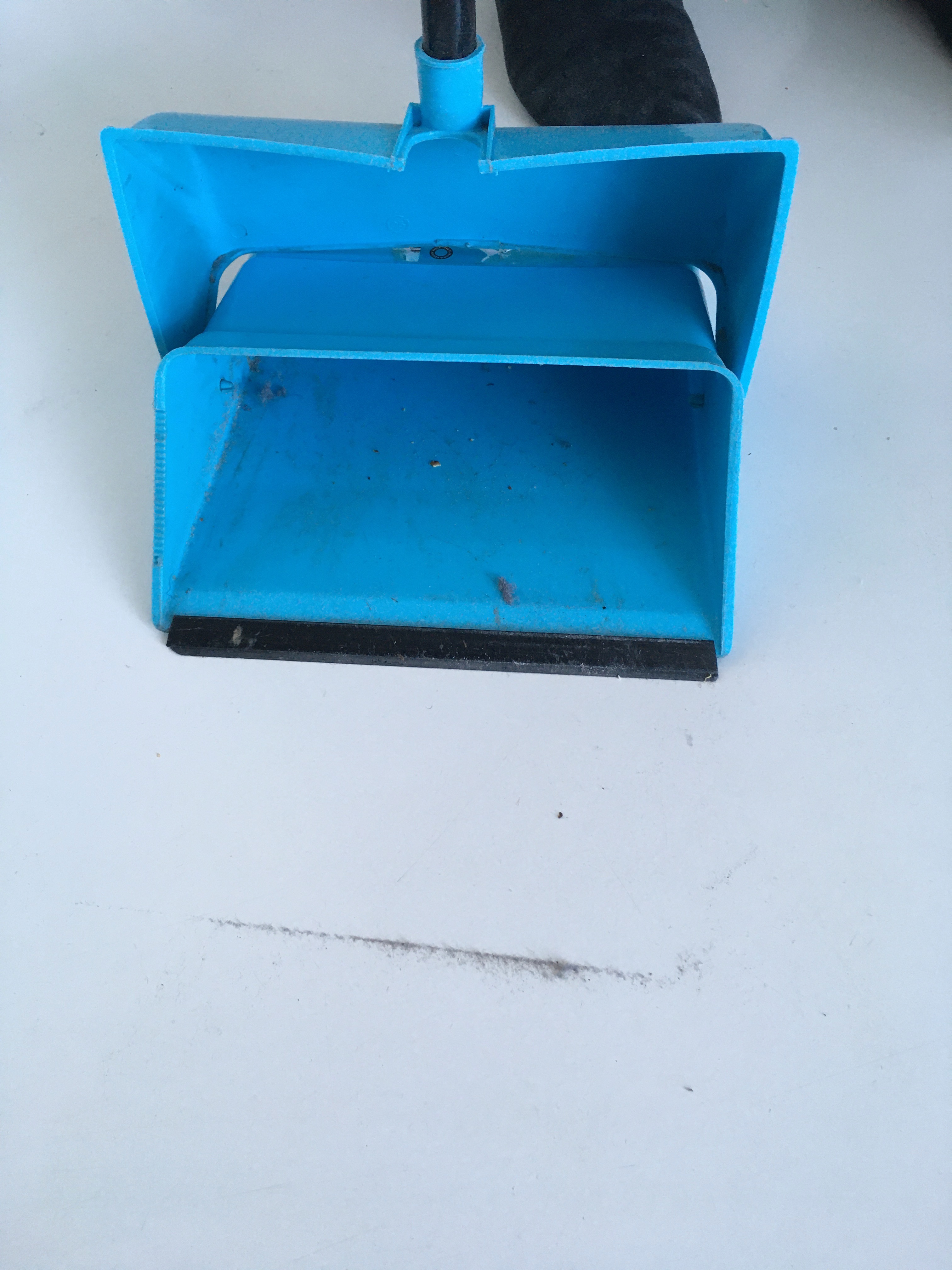
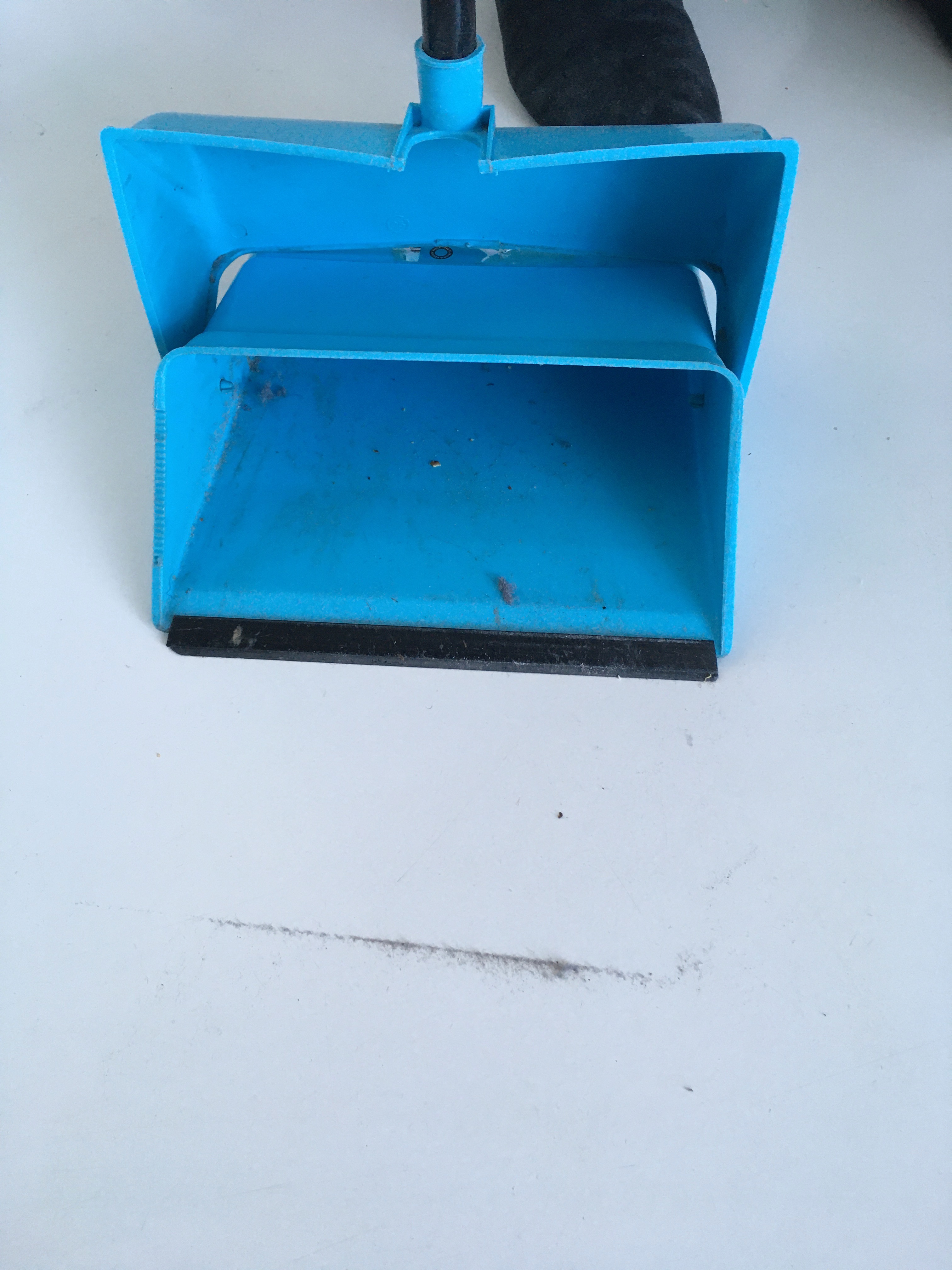
At this point, I realised that what his upright hand was holding, was not a Morris stick, but our long-handled dustpan and the wide forehand movements had been his sweeping of the brush towards the pan. However, nothing accounted fo the neat Scottish Dance steps.

His explanation was accompanied by more swearing and a demonstration of the fact that, however carefully he swept the floor, there remained, after he had swept the debris into the pan, a stubborn grey line of dirt he then had to chase across the kitchen, hoping that, by sneaking quickly up on it, as though on a fly he was going to bash with a newspaper, he would fool it, this time, into entering the pan, leaving not a trace behind.

I watched for a while, wondering whether there was any way I could harness this new enthusiasm in the service of our getting to dance more frequently.

Then I just got bored and hoovered up The Line.

I could swear he was disappointed.

April 13

Several years ago I attended a six- week course on Mindfulness. I was a bad student, wanting ‘results’ and wanting them fast, there-bye negating the whole process. I wasn’t sure what I was hoping for and, at the end of the sessions, I gave up and, beyond occasionally reminding “The Writer”and myself to slow down and notice what we’re eating, never thought about it again. But I am thinking about it in Lockdown. Two of the exercises in particular stay in my mind. The first was learning to clean one’s teeth mindfully: watching the toothpaste snake onto the brush, tasting it on the softness of one’s tongue, feeling the bristles of the brush on the gums, noticing the rhythms of brushing. (The point is not to think about other things as you mindlessly carry out a a dull and regular task but to stay in the moment, experiencing fully what is happening NOW, rather than thinking about what was or what is to come). The other most vivid exercise was to take a raisin, look at it carefully, turning it in your fingers, noticing its varying shades of brown, its wrinkles, its uneven shape and texture, then, having taken the time to appreciate every detail of its appearance, to put it in one’s mouth, roll it around the tongue, feel its declivities, notice its resistance when squeezed. Next, to chew it, savouring its sticky juice then, finally, swallow, concentrating as it leaves the mouth and relishing the sweetness left behind.

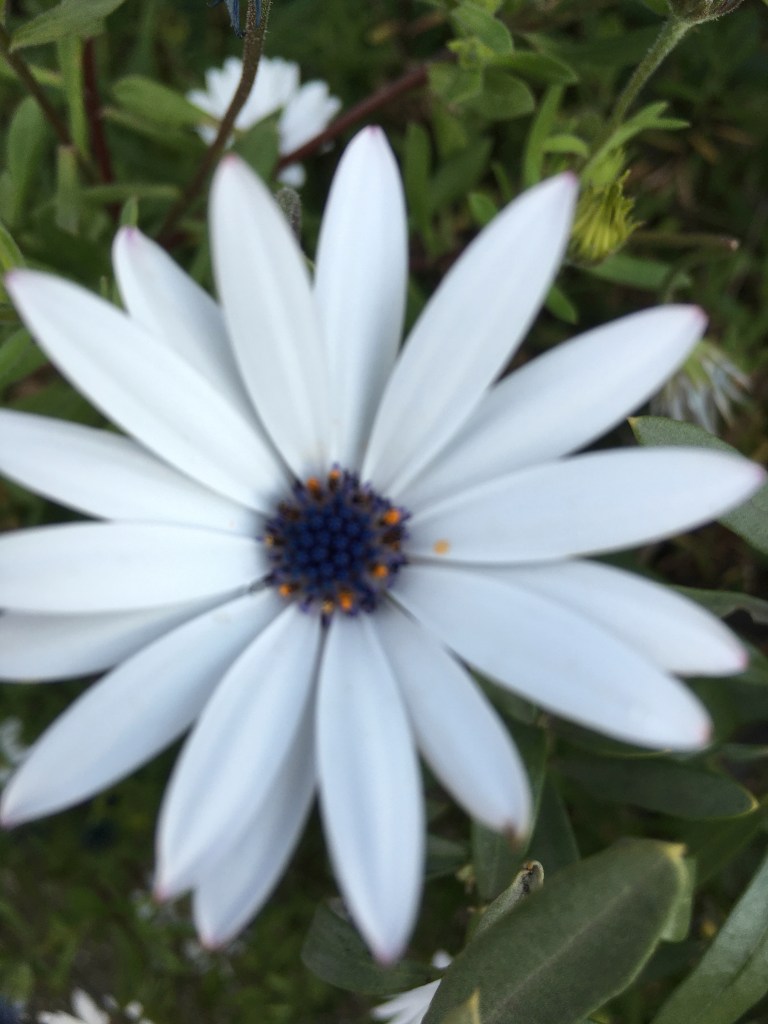
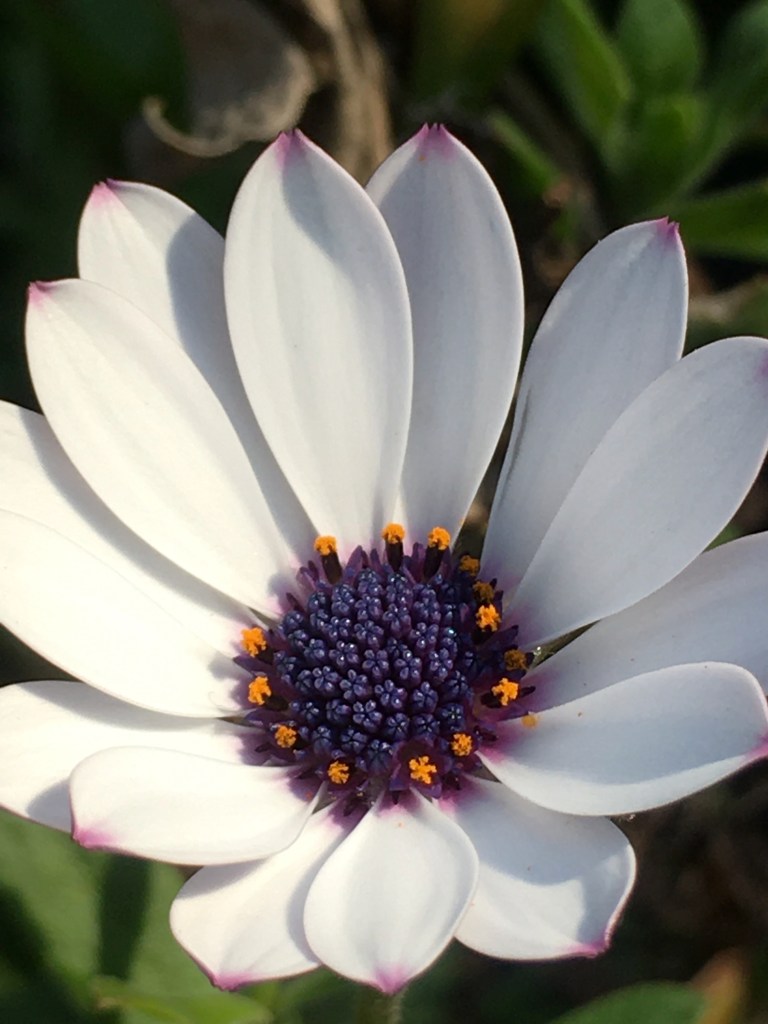
Now, in Lockdown, when the frantic hurry in which we city dwellers live has been rendered pointless in an instant, I feel myself growing more mindful of many things, especially the natural world, of which we can see only the plants that grow on our terrace and a few trees on neighbouring rooftops. Suddenly, I’m beginning no longer just to look at flowers, for example, but to see them. And the process is different. (I once volunteered to take LSD for an experiment carried out by the Psychology Department at my university, and there are similarities.). Maybe, it’s to do with not only seeing the whole but spending long enough in the moment to appreciate the parts that go to make up that whole. Below is a pictorial attempt at explaining how it feels to me.

Unmindful

Mindful

And here’s a stone on the terrace I have walked past, heedlessly, countless times but now, as I take the time to look at it, it’s extraordinary striations seem brilliant and arresting.

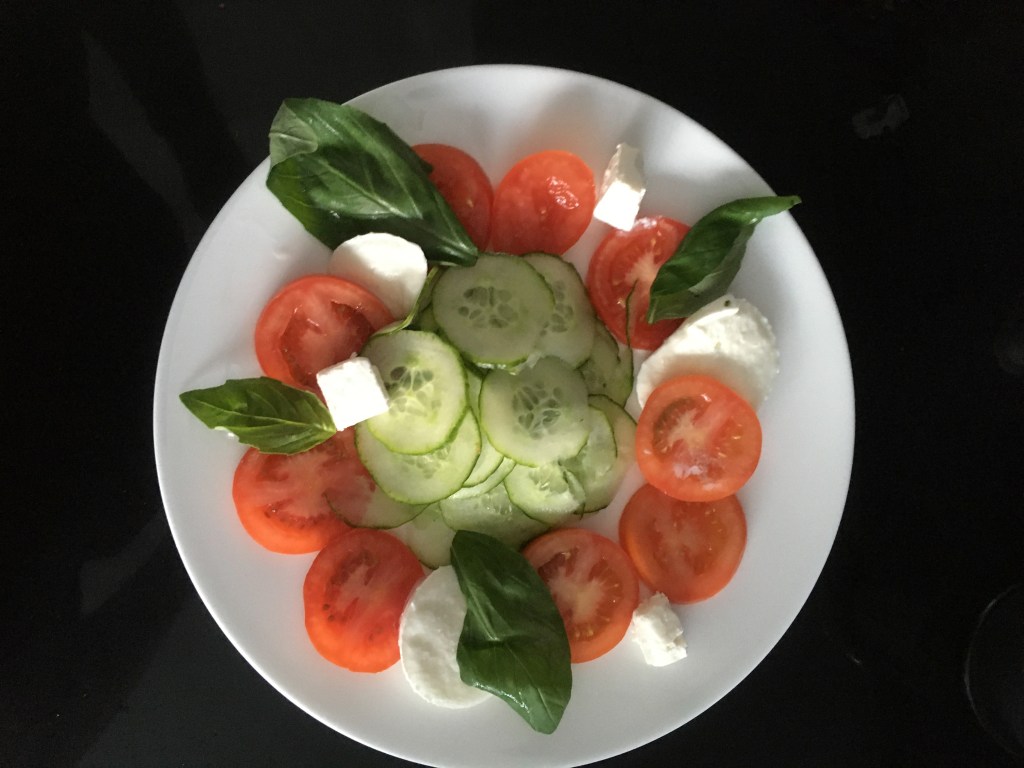
Even last night’s meal, the look of which I would not normally have paid any further attention to after arranging it on the plate, so busy was I rushing on to the next task, struck me as a thing of beauty, worth appreciating for longer.

If all this sounds narcissistic and fanciful, forgive me but I’m writing about it wondering whether it’s happening because one’s sensory input is much reduced at the moment or because the time available in which to speculate and observe is more plentiful. Is it happening to other people locked down indoors in cities? Those isolating in the countryside have a broader landscape to view and are not so constrained to look at the same few things over and over. Of course, a visual artist would probably have experienced all this as a matter of course but I am not an artist. I am word – and task- orientated and, as it turns out, grateful for this hiatus in which the tasks are fewer and less urgent and there is time to spare. I’d like to think that, when this is all over and the available sensory experiences are once more multiplied a thousandfold, it might be possible not to return to hurtling though life thoughtlessly but to stay more mindful more often. Perhaps even do part two of the course.

April 12

The conversation goes something like this:

Us: “Hello”

Them: “Hello”

Us: “Hello”

Them: “Hello”

Us: “Hello”

(Blank Screen and silence.)

Them: “Oh, now we can see you!”

Us: “Well, we can’t see you”.

Them: “Why not?”

Us: “No idea”.

(Blank screen and silence)

Them: “It’s OK we can see you now”.

Us: “Good”.

Them: “Switch your mic on. We can’t hear you”.

Us: ” It is on.Why can’t you hear us?”

Them: “No idea. Try switching it off then on again”.

Both: “It’s OK now!!!”

Us: “Can you tilt your screen down a bit, we can only see the top of your head”.

Them: “That better?”

Us: “A bit”.

Us: “How come you’re in Brooklyn?”

Them: We’re not, it’s San Francisco”.

Us: “How do you do that?”

Them: “You just choose a background photo from the library or you can make your own”.

(Long silence)

Them: “You’ve done it! Nice Palm trees. How is it on that beach?”

Us: “Lovely, no lock down”.

Them: “Sorry, can’t hear you. Sound’s gone again”.

Us: “Sorry ,can’t hear you. Sound’s gone again”.

Them: “It’s OK now”.

Us: “Good.”.

Them: “How are you getting on in London?”

Us: “Your picture’s frozen now and there’s no sound. Can you say that again?”

Them: “How are you doing?”

Us: “OK.” “Your screen’s fallen forward”.

Them: “What?”

Us: “Your screen’s fallen forward”.

Them: “We were wondering how you’re getting on”

Us: “OK ,considering”

Them: “You can’t answer while we’re still speaking. Can you answer again now”

Us: “OK, considering. But we can’t see you now.”

Them: “That’s because you can only see the person who’s talking”

Us: “Are you sure”

Them: “Pretty sure”

(A notice appears on screen)

‘Your meeting is over

Us: “Bye. Great to chat. Let’s do it again next week”.

Them: “What?’

APRIL 11

Have you noticed how many moons we have lately? We used to have just the Old Moon and the New Moon, and that was it. This year alone, we’ve had a Wolf Moon in January, a Snow Moon in February and a Worm Moon in March. Latest, was the Pink Moon, last week, whose dramatic appearance was billed well in advance: Not only was it was it to be a Pink Moon, we were reminded, it was also a Super Moon. Both at once – Wow! We get our thrills where we can during Lockdown.

After some fraught minutes, we agree it doesn’t really look very pink to either of us and I take a ‘photo on my ‘phone in order that we can examine its colour more closely.

“Best viewed around 10:35pm”,the newspapers promised. At 10:30 “The Writer” and I are poised. We emerge, excitedly, onto our terrace and gaze at the sky. Sure enough, there it is, a huge, brilliant moon illuminating the air – conditioning units, chimneys and ghastly red, green and orange Google headquarters, not far in the distance. First thing I experience on seeing it is a twinge of disappointment at the fact that it doesn’t look particularly pink. I keep this to myself, not wanting to spoil my husband’s pleasure. Obviously, he can see the pinkness, as he drinks in the sight, apparently enraptured. Time passes. After some while, tentatively, he, too, admits to some misgivings about its colour. We discuss it. Is it pink? Really pink? How Pink? I take a photo on my ‘phone in order that we can examine its colour more closely.

The ‘photo confirms its lack of pinkness.

We concentrate harder.

After about 15 minutes and the onset of neck pain, “The Writer” tells me he can definitely see a pink glow around its edges, a sort of pink aureole. I can’t see the glow but can see a definite blush on the cheeks of The Man In the Moon. Yes, it’s pink. The moon’s pink. We agree ,it’s pink. Amazing – a Pink Moon and a Super Moon at that. How lucky we are to have seen such a rarity.

We return indoors, satisfied, and celebrate, not with an appropriate glass of rose wine but with red, the nearest we have.

Not until yesterday, alerted by a knowledgeable friend to whom we were boasting about having seen the pinkest of Pink Moons, did we discover that the Pink Moon is named by Native Americans after a pink wildflower that blooms in April. Alternative names for it are: “The Sprouting Grass Moon”, “The Egg moon” and “The Fish Moon” and – you’ve guessed it – it’s not pink at all ……..

***********************************

My Mother, who died last September, aged 106, was obsessive about New Moons. You mustn’t see one through glass – that was unlucky – and when you went outside to avoid whatever curse was in store if you stayed inside, you had to turn your money over in the palm of your hand. I remember the scurry in the house to open the front door without seeing the moon through the window. (We must already have at least glimpsed it, otherwise how would we have known it was there?). When you were safely on the pavement, came the discovery that you had no money in your pocket, followed by a rush back inside with averted eyes, the whole saga ending as you stood, feeling foolish, turning over the odd coins from the kitchen table in sight of astonished neighbours wondering if , perhaps, we’d joined a cult. It always seemed to me that the turning should be accompanied by some kind of incantation or spell. As dramatic rituals go, it was somehow unsatisfactory.

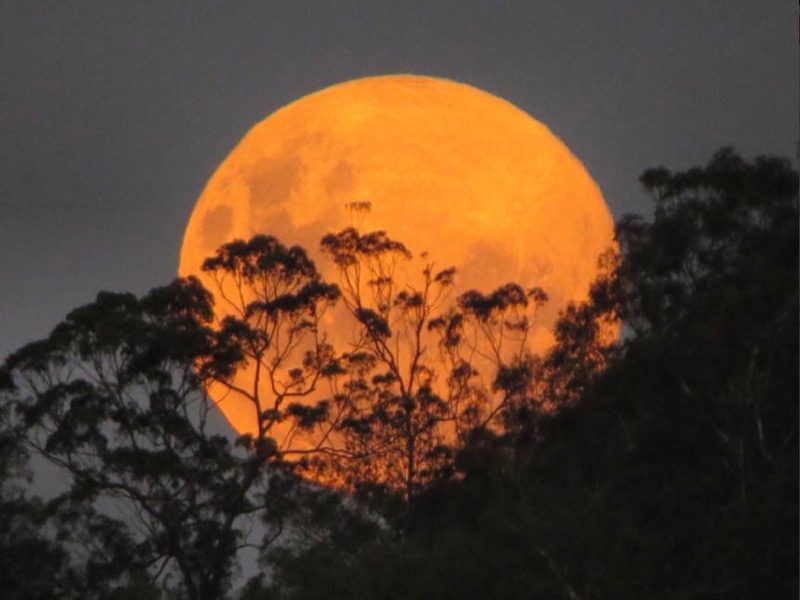
Now that’s what you call a moon. Pic sent yesterday by, Warwick, my old friend in Australia

*********************************

Anita, a primary school teacher friend, once gave me the only way I have of knowing whether what I’m looking at is the crescent of a new moon or the tail of an old one. “Comma, coming” is her way of helping the children in her class (and me) to remember it’s the New Moon that looks like punctuation in the sky.

****************************

Moons to come are:

Flower Moon in May

Strawberry Moon in June

Buck Moon in July

Sturgeon Moon in August

Full Corn Moon in September

Beaver Moon in November

Cold Moon in December

And, in case you’re wondering, a “Blue Moon” apparently occurs only once every two and a half years. Hence the phrase.

April 9

” Now, Dinah,tell me the truth. Did you ever eat a bat?”

Down the Rabbit Hole from ‘Alice’s Adventures in Wonderland’ by Lewis Carroll

Like Alice on her journey down the rabbit hole, my own sense of unreality intensifies at unexpected moments. These moments often occur as we listen to each day’s mounting death-toll – 201 a day in London at the moment – I suddenly feel a disconnect from the deaths and the disease. Here we are, shut away, comfortably carrying on not that differently from before and outside our walls there is a seething Hell. What are we doing shut away? What are we waiting for? When this lockdown ends, we still won’t be able to go out safely. Not until there’s a vaccine and its discovery is far from certain. Will we be here until there is one? Will we be here for the rest of our lives? We are already old – though we didn’t feel it until this disease picked us out for slaughter – and these next years may be the last in which we are active, can travel, move without pain, function normally and think straight. Are these precious years being stolen from us in the name of keeping us safe?

In an effort at reassurance, “The Writer” reminds me that these are the precious years. They haven’t been stolen. We are living them. We are together, in our middle-class eerie, happy in each other’s company, though constantly aware of how terrifying it is for those in the thick of it. We may see the world change for the better, we may see unimaginable poverty or a global economic recovery, Who knows? But, however it turns out, we have never witnessed and will never witness such extreme change. And we should relish this time, though filled with fear, as a vivid part of our lives, not merely an empty interlude.

I know he’s right, but as the death- toll mounts and when we read the forecast that we may soon become the worst-hit country in Europe, it’s pretty hard to dredge up much optimism.

It may be that our friends living in the countryside are able to take some comfort in nature that’s unavailable to us city- dwellers. The pictures they send of their remote walks and wide landscapes are consoling. Meanwhile, we find the natural world where we can: plants on the terrace, birdsong that we can now hear clearly, bees from our neighbour’s hives busy in the flowers……..

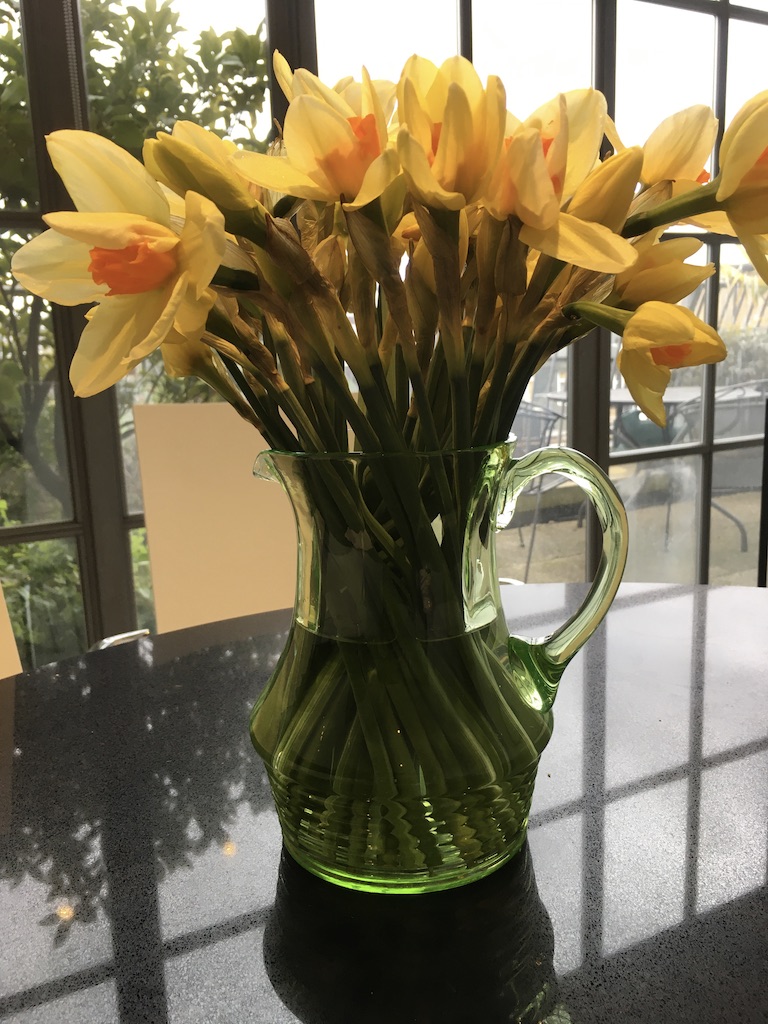
………..A couple of days ago, I heard an interview with a nurseryman. His plants are dying, garden centres are closed and he is about to go bankrupt as his busiest time of the year passes without sales. Feeling guilty for such indulgence, I ordered a bunch of flowers and sent them – to myself. I know it won’t help him or the hundreds of other desperate seed- merchants and growers but they have brought a breath of Spring into the house and, for that, I’m grateful.