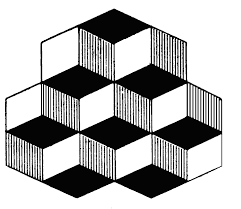
These two famous optical illusions about change of perspective represent what happened to my husband and me today on our regular walk in St. Janes’s Park.

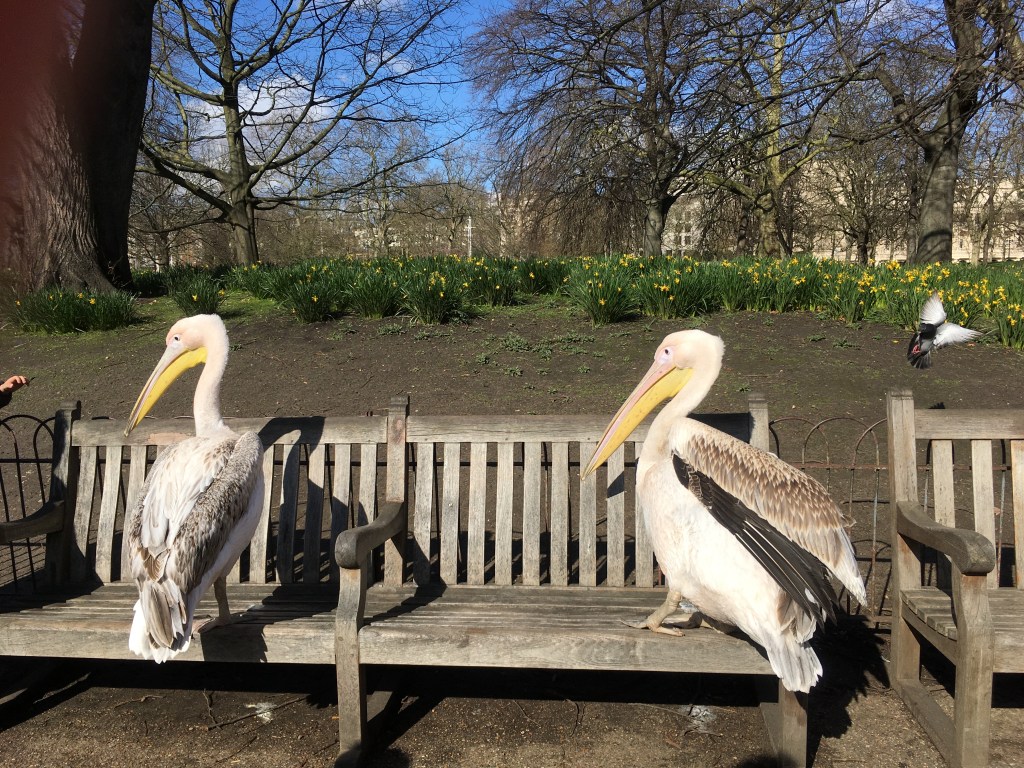
As we stroll, we notice up ahead, an elderly gentleman with a small, white dog on a lead, stoop to peer at something behind a bench. The writer is curious as to what he has found and approaches him – at a suitable social distance, of course-to see what is occupying him so intently.
“Oh”, he says,”I was just looking at the inscription on the back of this bench. I always read them when I pass”.
And, with that, our regular walk shifts its perspective.
“The writer’ and I both love memorial benches. He, in particular, has written about them often and will stand, lost, in front of one, reading and conjuring up the life of the person who inspired such touching emotion or occasionally, depressing mawkishness. However, neither of us has seen a dedication on the back of a bench. We’re used to coming across them on neat little metal plaques on the front and had no idea there were any in this park where we spend so much time. We retrace our steps, this time walking on the grass not the path, and, sure enough, there they are, not etched into flimsy metal squares but carved deeply into the wood itself.

“In memory of Valery Yermolaev 18.4.1946- 08.08.2001, who lived in Russia, made movies and loved London more than any other city in the world.”
When I get home and consult Google, his filmography tells me Valery worked on Goldeneye as well as Onegin, Crime and Punishment and Leaving Lenin but I can find no photograph or anything more about the Russian man who loved London so much. Why did he love it? Would he liked to have lived here instead of Russia? Did he sit here, in this park, wishing he could stay? Alessanda Kapp (below) and the other members of the Kapp family whose Italian names decorate several of the benches lining the path along the lake, remain a mystery. The internet yields no portrait or life story’ I guess they loved London, too, else why the bench here in the city’s heart?

My husband suggests a visit to the little park in which I have placed a memorial bench to my mother. She and I would sit here so often, gazing at the flowerbeds and soaking up the sun and I was overcome with nostalgia watching the bench’s installation on a crisp October day. It means more to me than her gravestone ever will because a bench has life: people argue on benches, speak words of love on them, rest when they’re weary, tie their dogs to the arms, watch toddlers play around the legs, eat their sandwiches on them and lose themselves in their books. I look forward to the day when the lightness of its bright, new wood has dimmed to grey, lichens have added green and it has become the favourite meeting place of another mother and her daughter.

 Locked down in London