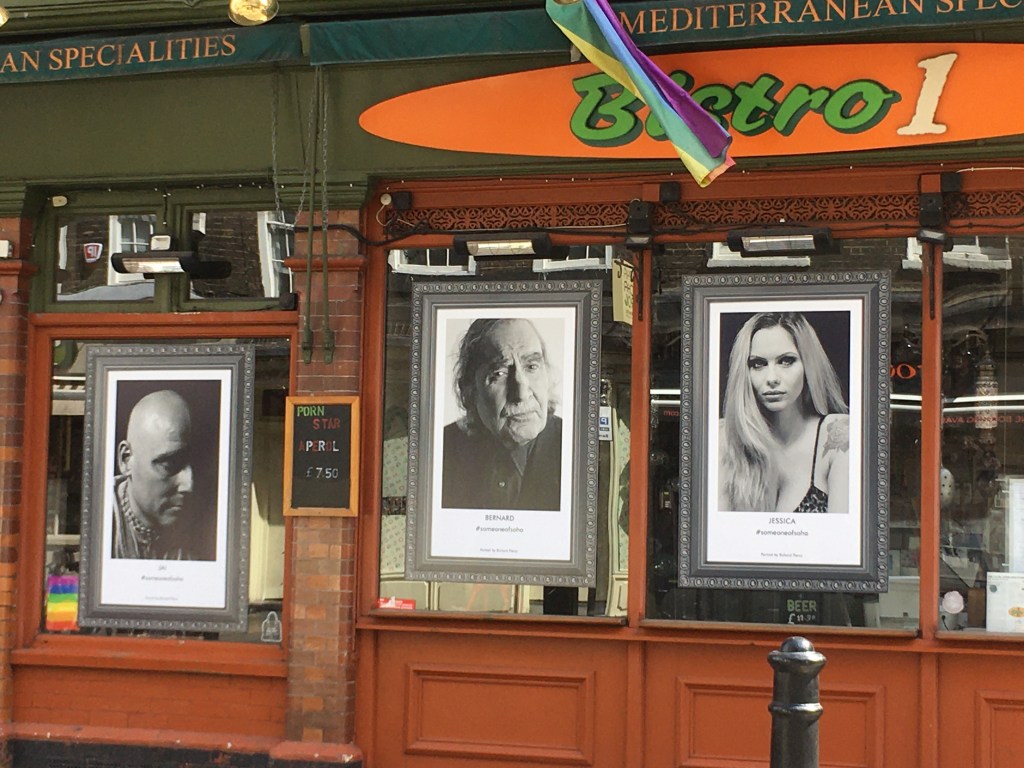
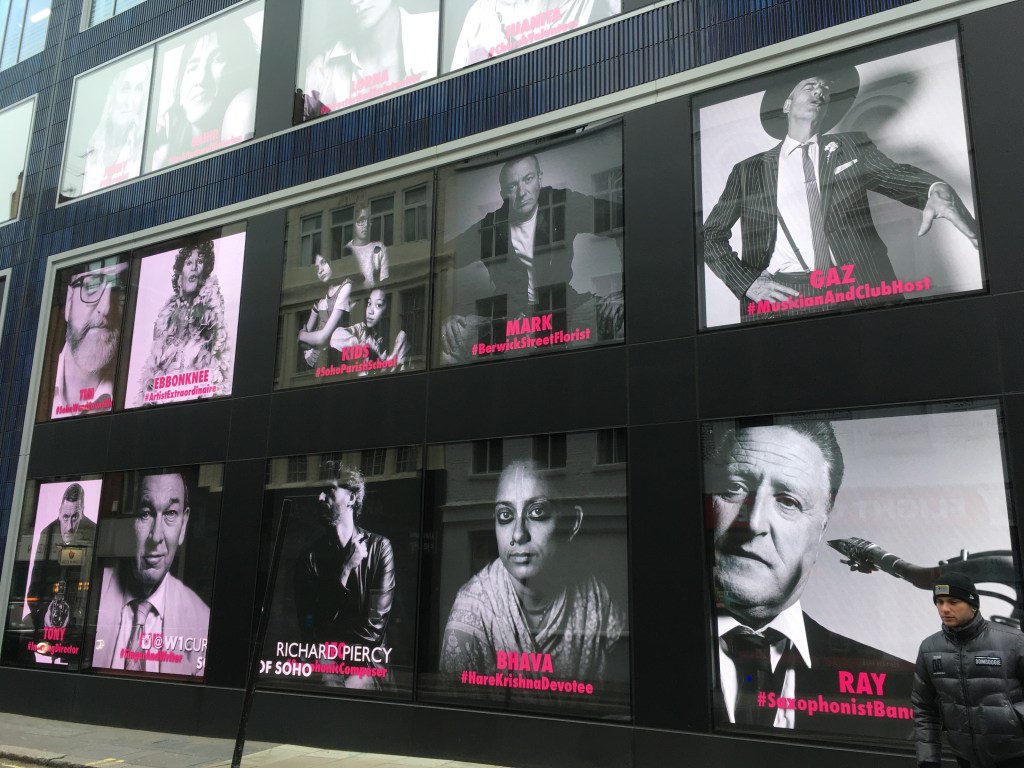
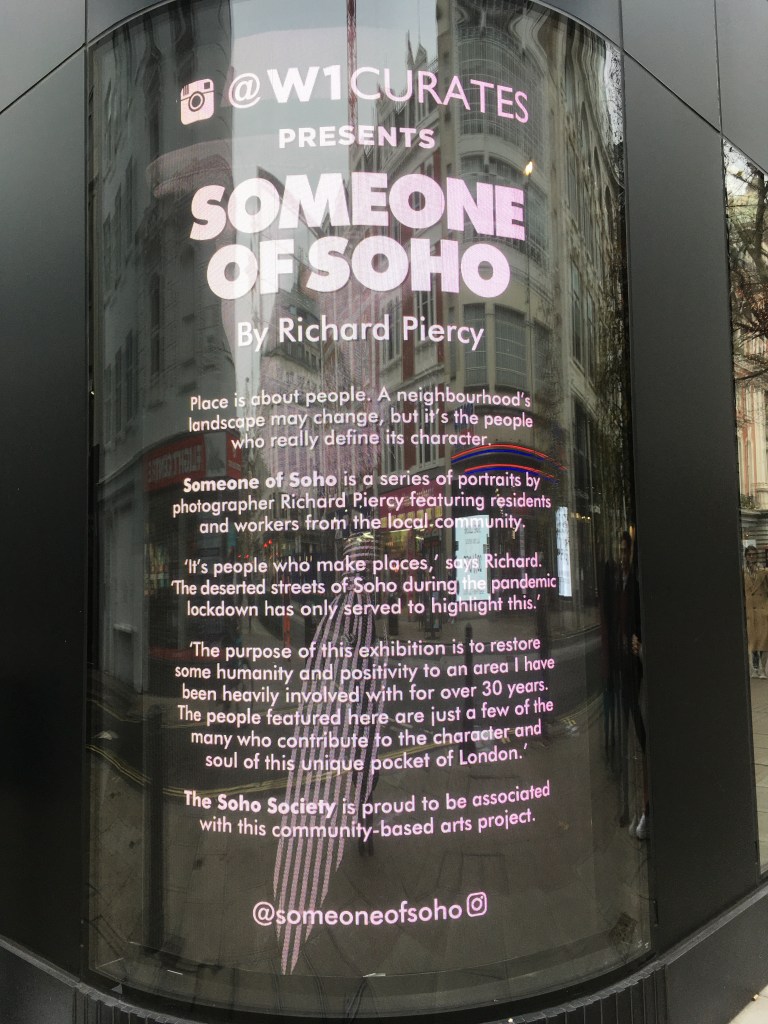
In my post of June 11th, when London was like a ghost town under complete Lockdown, I featured the dramatic and perceptive portraits of Soho residents and workers by photographer, Richard Piercy, in his Someone oF Soho Exhibition, shown on the sadly boarded up- restaurants of Soho.
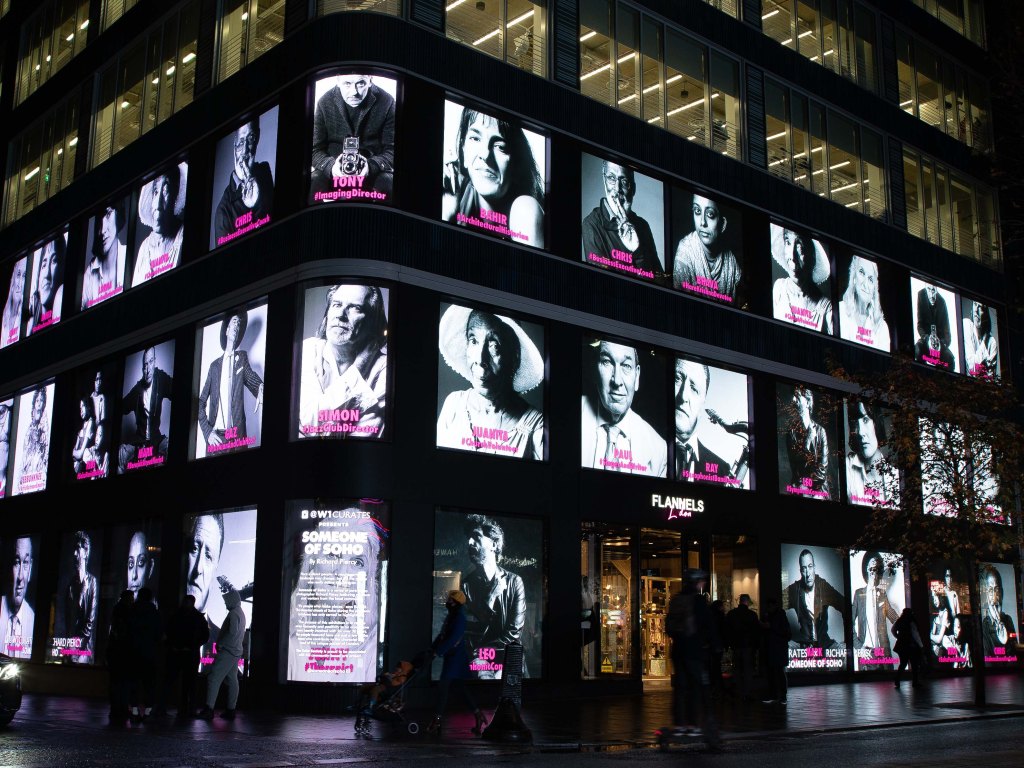
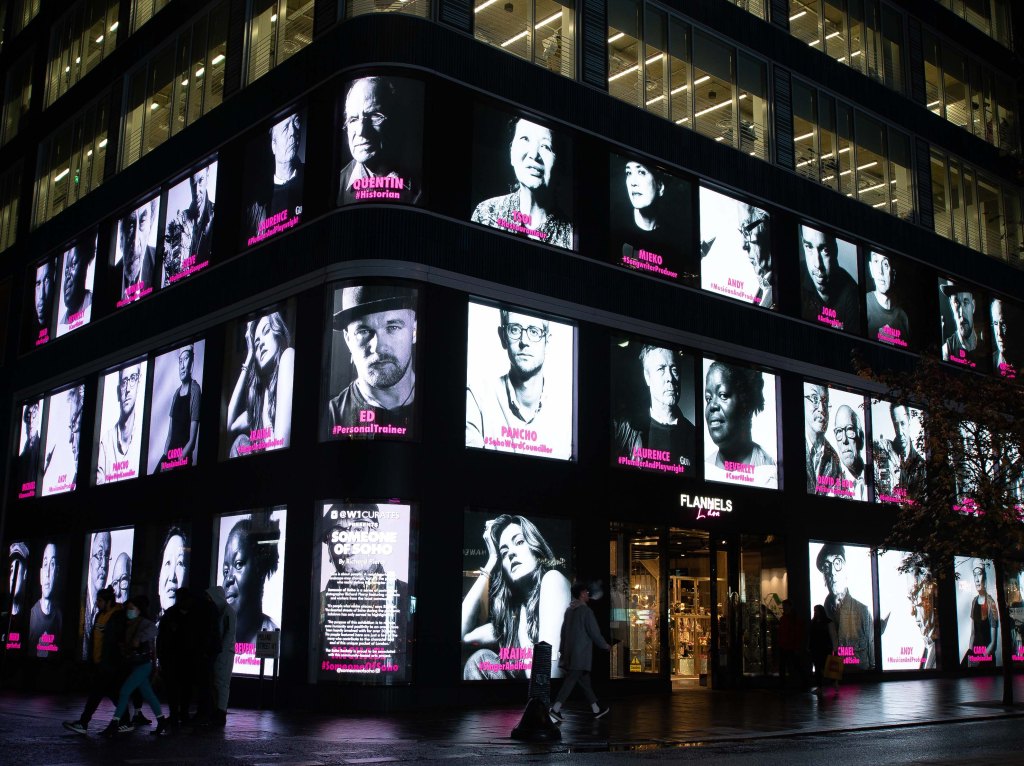
Today, walking down Oxford St., I was confronted, once again, by his portrayals of our neighbours and friends on the video wall of the clothing store Flannels, at number 161-167 Oxford St..
I’ve always felt that the brilliant and expensive technology of this huge video wall has never quite found anything as exciting as itself to display. The medium has always eclipsed the message. But now, on a dark and rainy December day, it has finally come into its own.
We Soho-ites spend a great deal of time complaining that the heart is being torn from our distinctive corner of London – by Crossrail, Covid and expensive developments that drive out the creative industries, music venues, fabric shops and brothels for which Soho was famous – so it’s heartwarming to see that, in these portraits, Richard Piercy has captured what looks like a bunch of interesting, distinctive people whose individuality appears, for now, to have survived the attempted homogenisation of Soho.
As Piercy says, ” A neighbourhood’s landscape may change but it’s the people who define its character.”
Given that the landscapes of our High Streets are already undergoing great change, Piercy’s work carries an optimistic message.
The exhibition is on 24 hours a day up to and including December 13th.
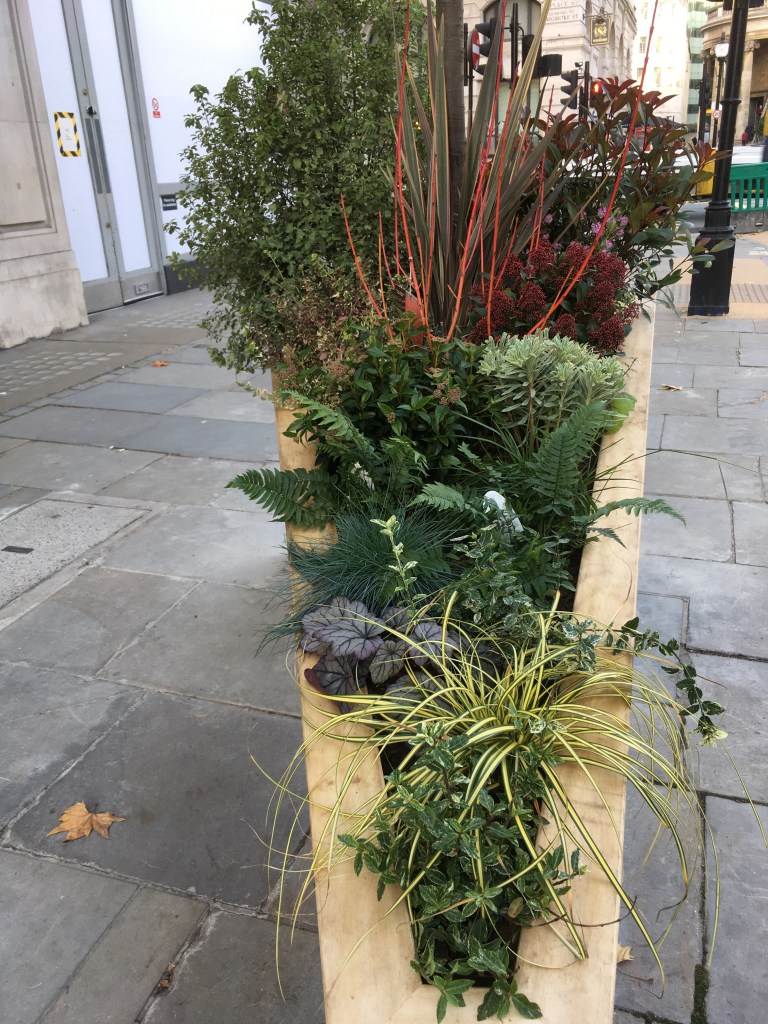
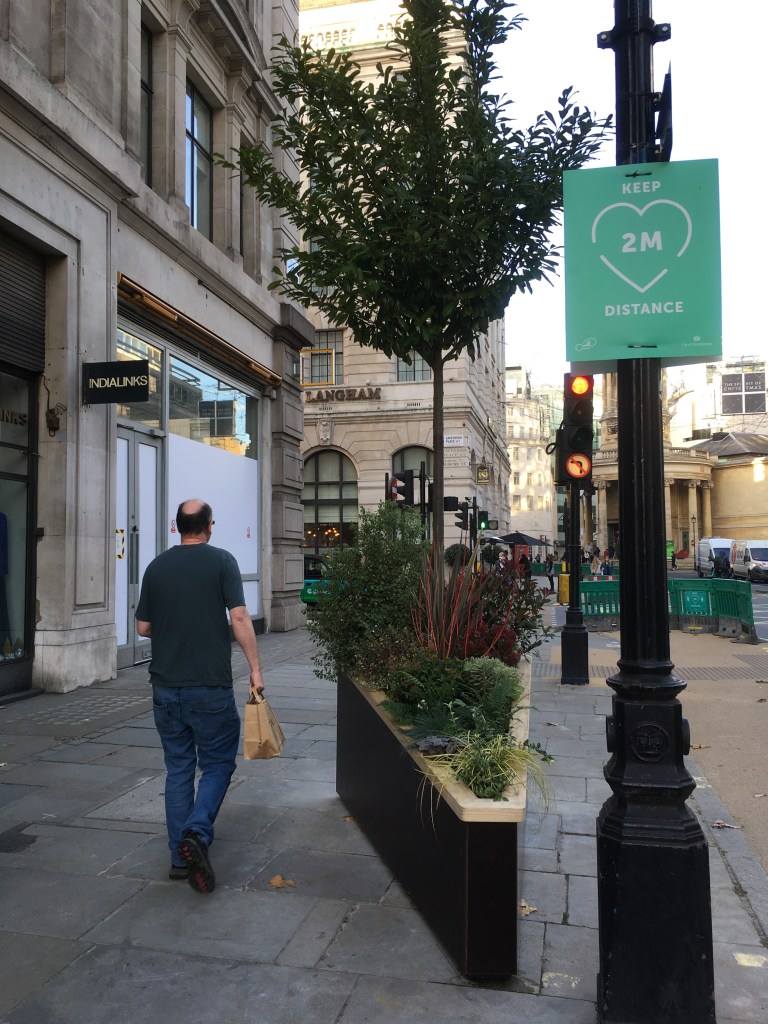
A quick catch – up to my post of November 29th about trees being planted along London’s Regent Street. Most of the planters are already filled and by Christmas the tress have reached the full length of the street.
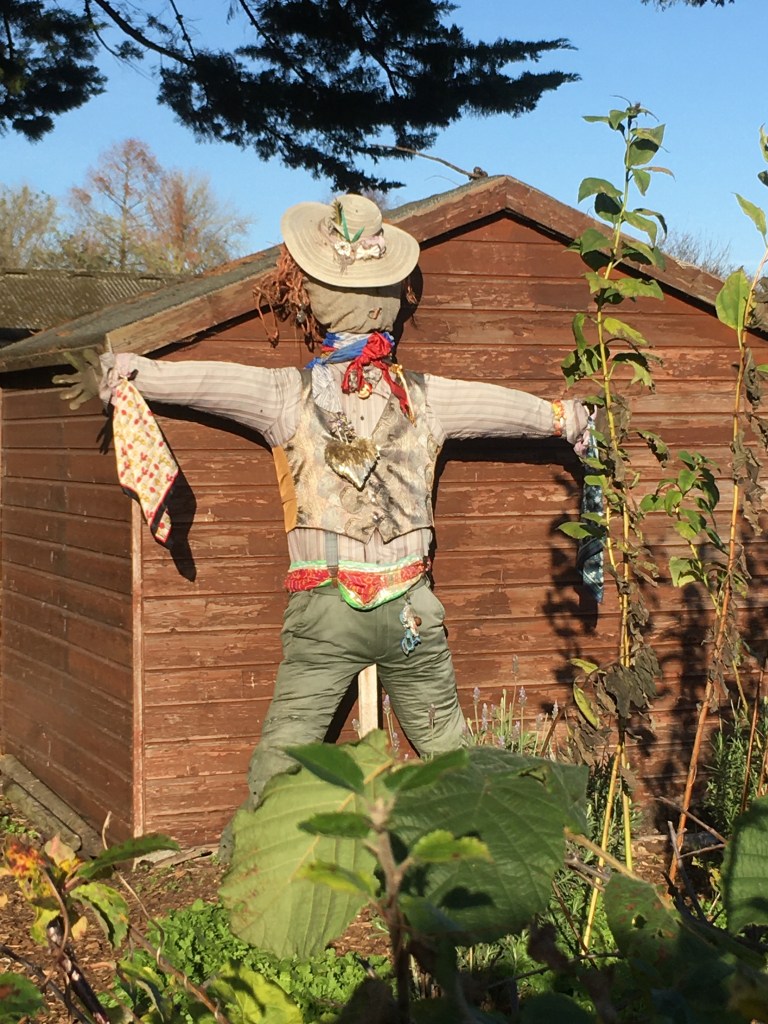
Shame there won’t be a job for this jaunty scarecrow we spotted almost at the entrance to Queen Mary’s Rose Garden in Regents’ Park.
Yesterday morning I received news that brought a definite sense of Soho waking up.
A proposal headed “Save Soho” aims to designate July, August and September a “festival”, close all the streets around us and pedestrianise them so revellers can eat, drink and make merry in celebration of the restaurants re-opening.
It sounds like a great idea: Since Soho is mainly filled with restaurants nowadays – food having apparently taken over from sex – and many kinds of workplaces whose staff can work from home, it has become a complete ghost town during the pandemic. Friends in Fulham and Hampstead are beginning to meet in local cafes, to sip coffee at a safe distance from one another but there is still nothing open round here except liquor shops and The Bagel Bakery.
I start out as an enthusiast for the plan then “the writer”mentions that, if there is a spike and we remain locked down, there will be no food deliveries because of the road closures and we’ll starve. This is not a good start. Then we remember the time when Old Compton St. was pedestrianised and became an open air pub, with drunks lurching round the streets throwing up and no-one to call “Time”. And then we realise that without road access, we won’t be able to get to our garage.
Please let us try toavoid being the old, grumpy Scrooges who naysay everything. The local restaurants are where we have our best times and we do want them to thrive. There will be a compromise.
Thinking about the proposal, I suddenly want to see for myself what is going on in the streets around us.
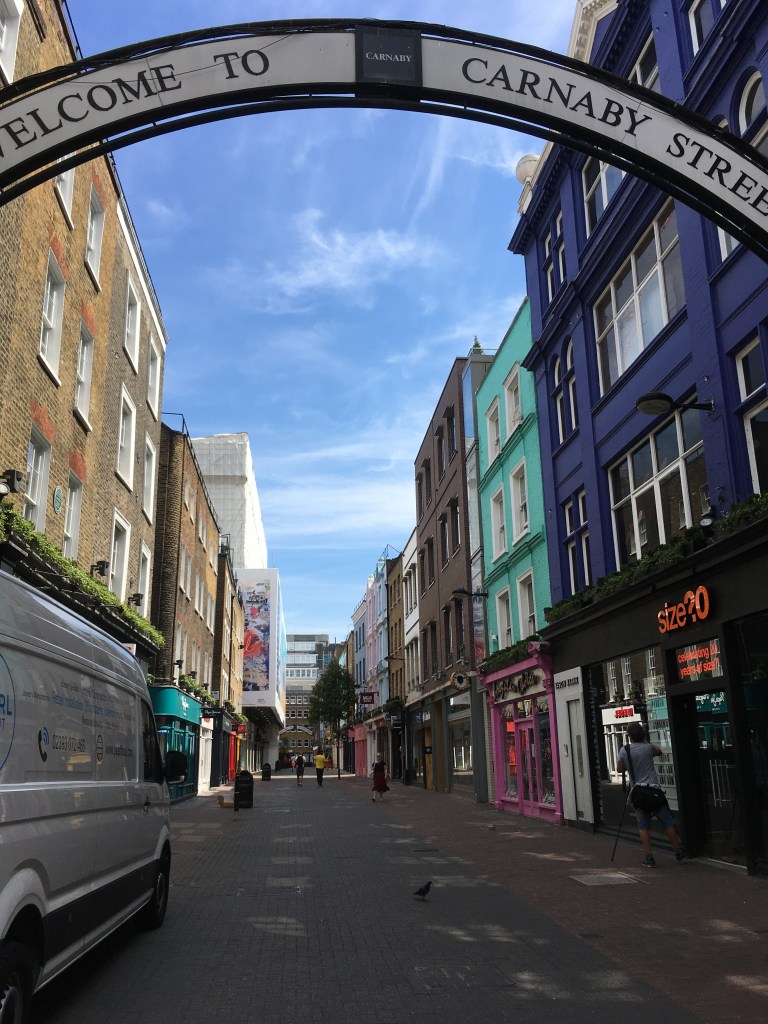
As I walk down an empty Carnaby St. into an even emptier Regent St. the answer is -very little.
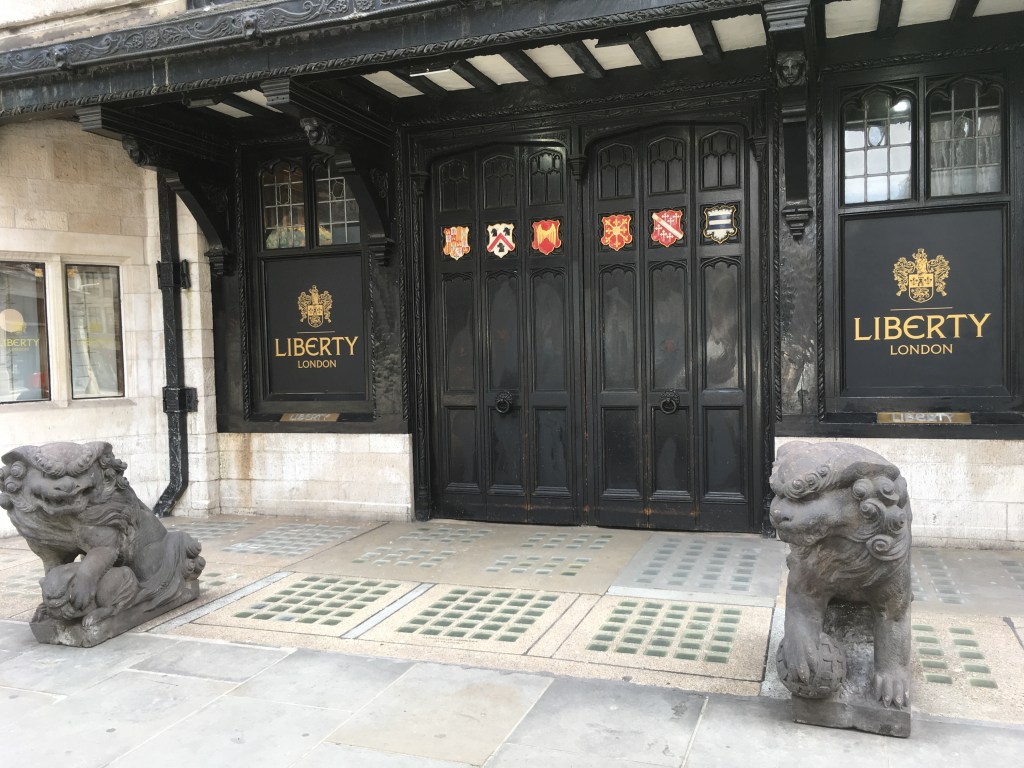
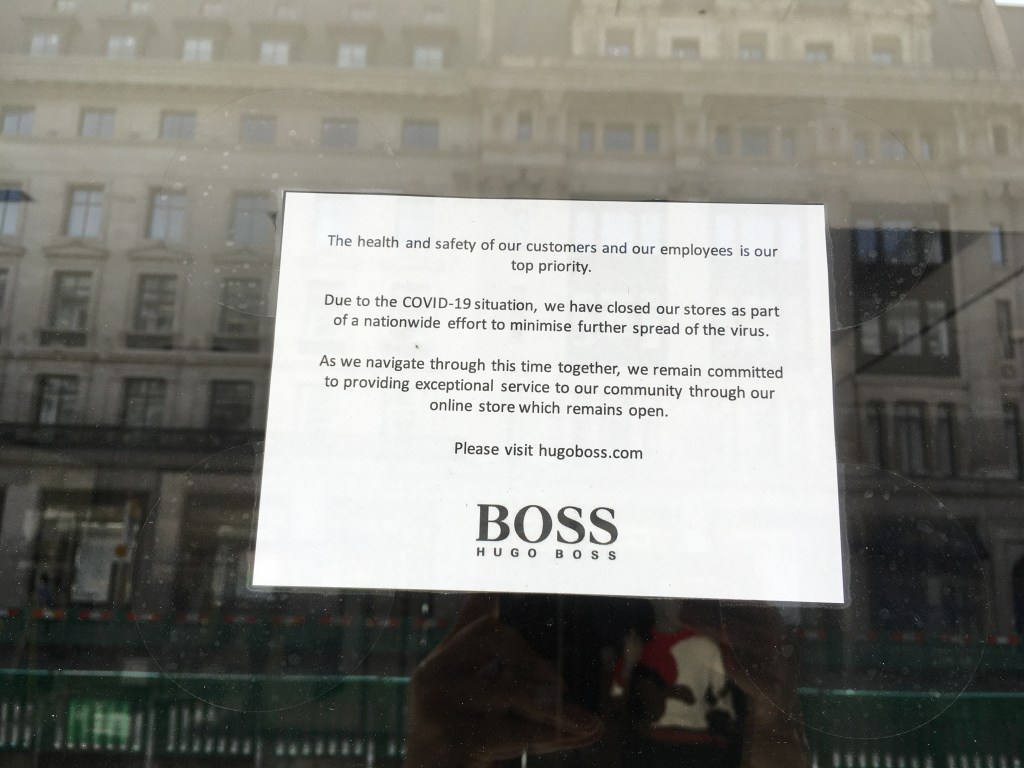
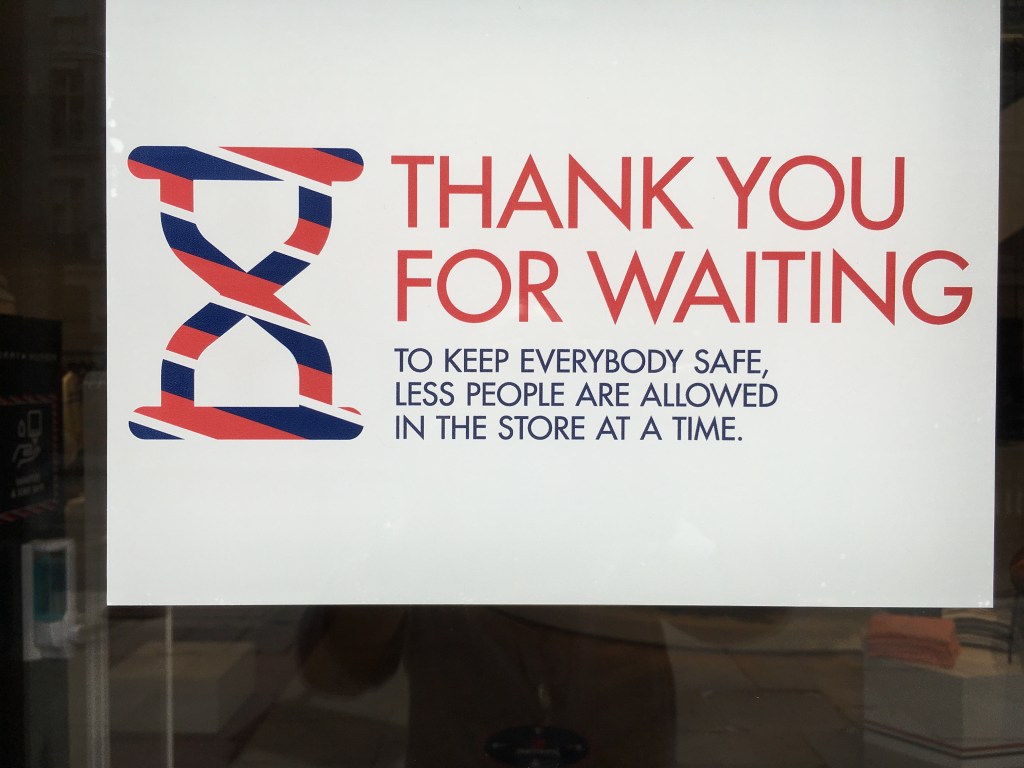
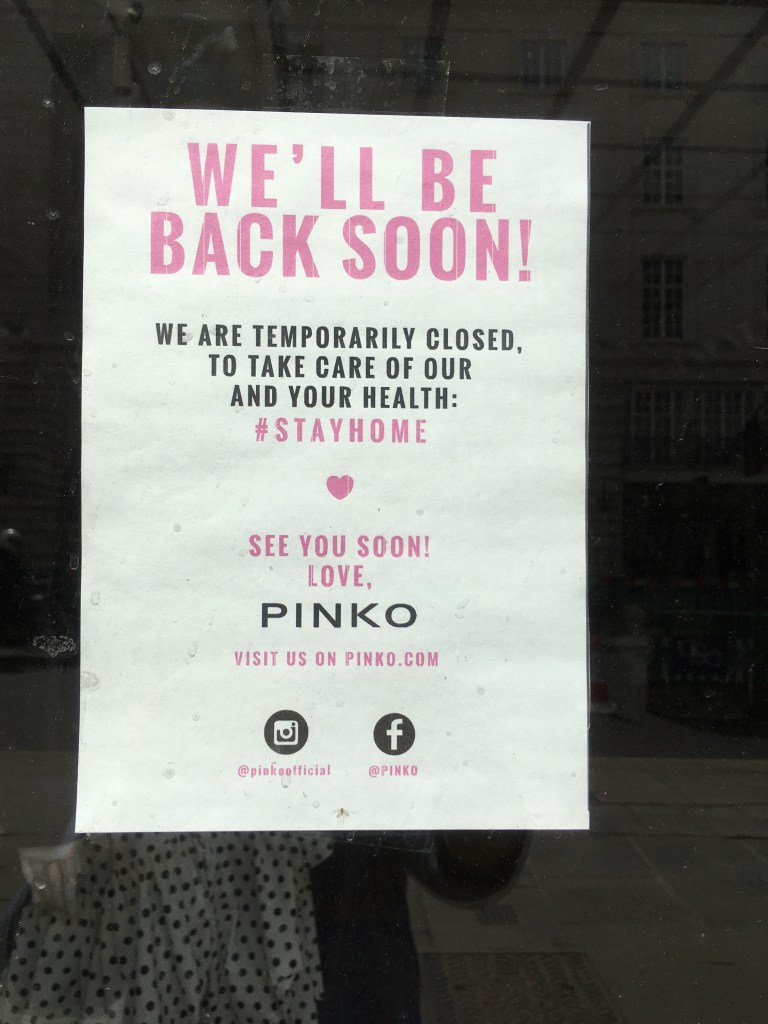
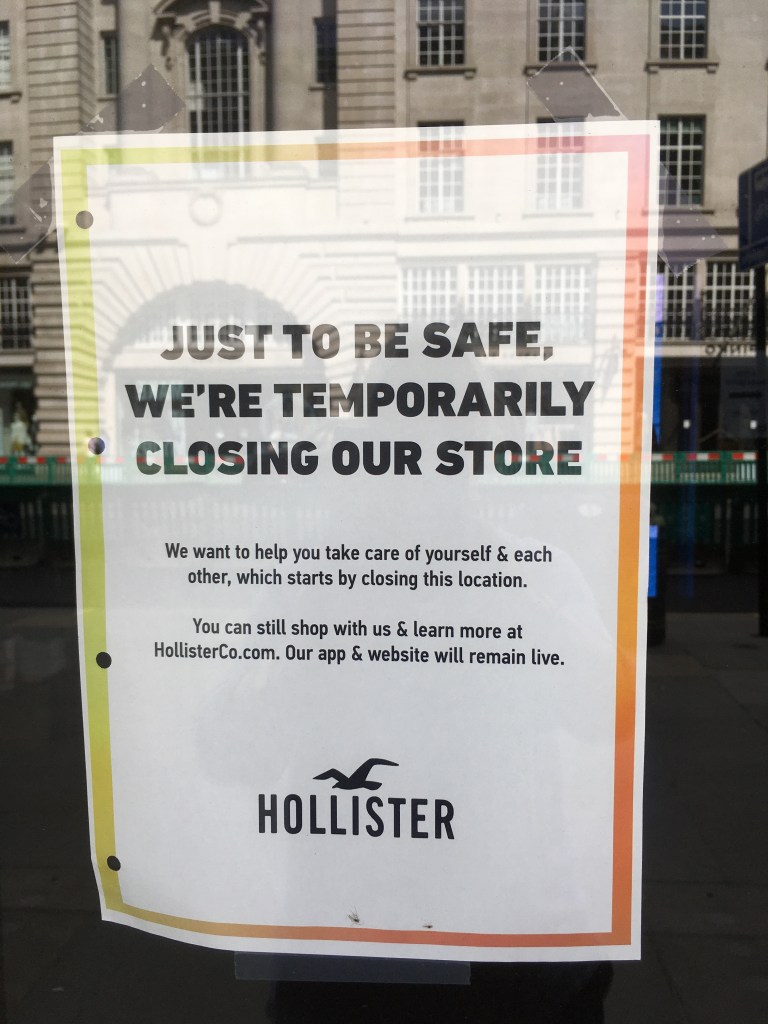
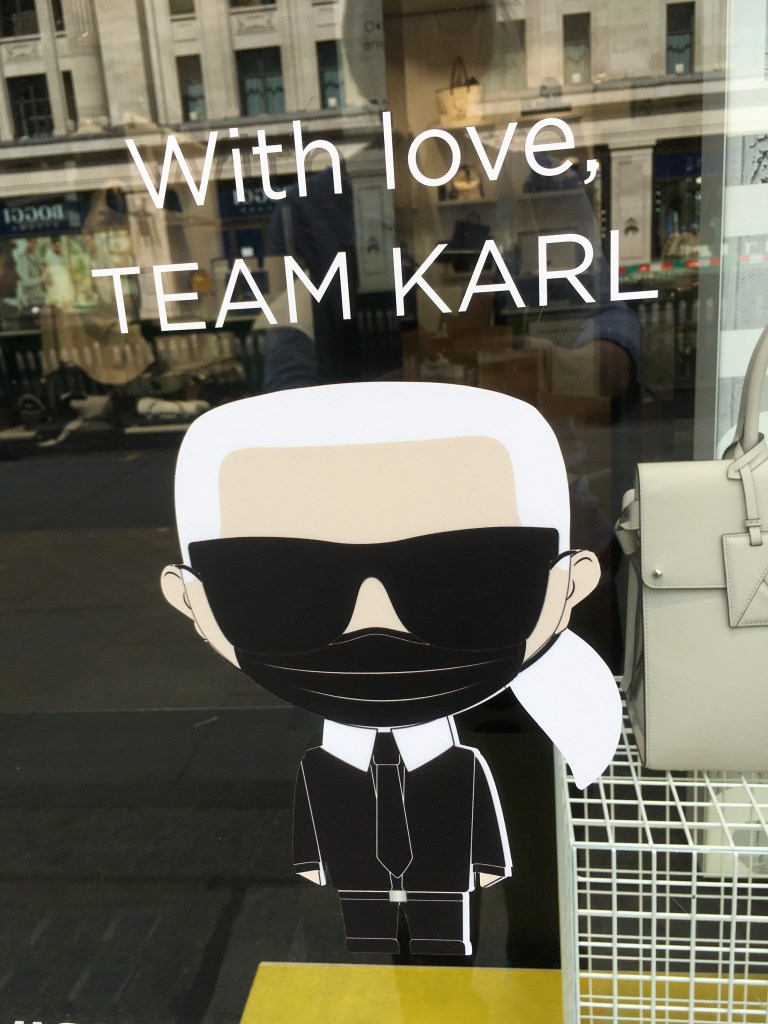
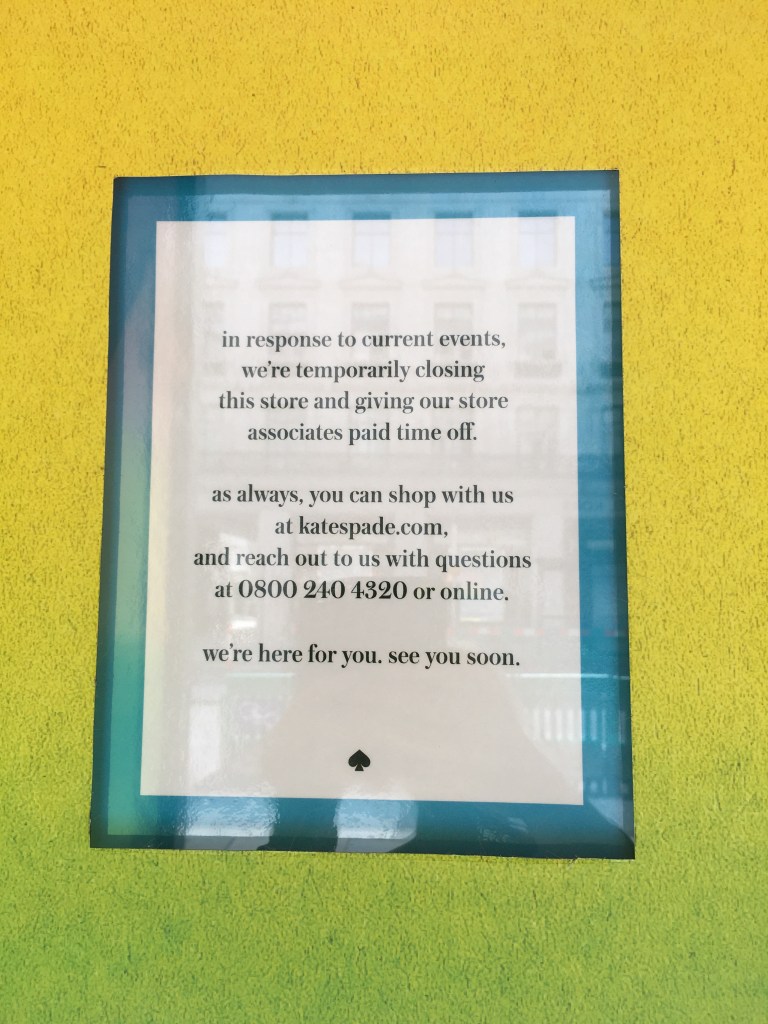
Peering through windows, I see staff in a few shops heaving boxes of stock about, readying themselves for possible opening on June 15. Otherwise, I encounter only a few aimless window-shoppers and little else. I must say, though, it is a relief to be away from the park joggers. No-one runs up and breathes in my face here.
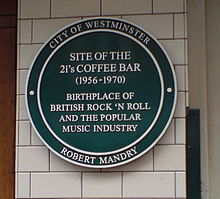
I hadn’t realised it would be so odd to be walking in the city without being able to stop for a coffee and maybe even a pastry and I wonder why at least the prospect of doing so is important to both of us. Partly, it’s an opportunity for the impromptu. “Let’s just stop here”. So much has to be booked way ahead in London, it’s a relief to just “drop in”. It’s also the best way to enjoy the cabaret of passers-by in comfort – and of course there is the coffee – and the cake and the fact that the coffee bar was once the expression of Soho bohemianism. In the 60s, when I lived far away in North London, the 2i’s coffee bar at 59, Old Compton St. was one of my favourite Soho haunts. Skiffle was the music of choice on the tiny stage in its equally tiny basement until Tommy Steele and Cliff Richard sang there and the music scene changed.
The only thing I can’t remember about the place is what the coffee was like, mainly because I don’t like coffee and in those days it wasn’t cool to drink tea so I was the uncool kid who had to carry a teabag around to restaurants and persuade sniffy waiters to dump it in a cup, there being no pot on the premises – at least not the tea -brewing kind.
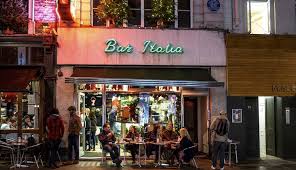
When we came to live in Soho, Bar Italia at 22 Frith St, where John Logie Baird first demonstrated how we could all become couch potatoes, was still, and remains, the area’s iconic coffee bar. It’s been there since 1949 and is still a family business
Sadly, such coffee bars – in fact most coffee bars- disappeared decades ago, only to return sanitised, respectablised, sleeked and indistinguishable in the form of Starbucks, Costa Coffee and the rest. I guess double expressos or cappuccinos didn’t cover rising rents whereas a venti salted caramel mocha frappuccino with 5 pumps of frappuccino roast, four pumps of caramel sauce, four pumps of caramel syrup with double blended extra whipped cream sounds a lot more likely to cope with those business rates.
In fact Starbucks in Carnaby St.was the only other place open on my walk, serving takeaway coffees largely drunk on the steps of The London Palladium nearby. And this, below, was the only other, sad remnant of the vibrant, buzzy social life we love so much. Good for them for keeping going.
Perhaps we shouldn’t worry about starving and rejoice in the prospect of the re-awakening of Soho.




 Locked down in London