I’ve often said that, for me, serendipity is one of the most important things Lockdown has stolen. Outings (when they are allowed at all) have to be planned according to the weather as we won’t go indoors, restaurants have to be recce’d to make sure outside tables are the right distance apart, meals have to be scheduled so that deliveries produce the necessary ingredients and not unusable substitutions. Friends can’t turn up unexpectedly and drop in for a cup of tea.
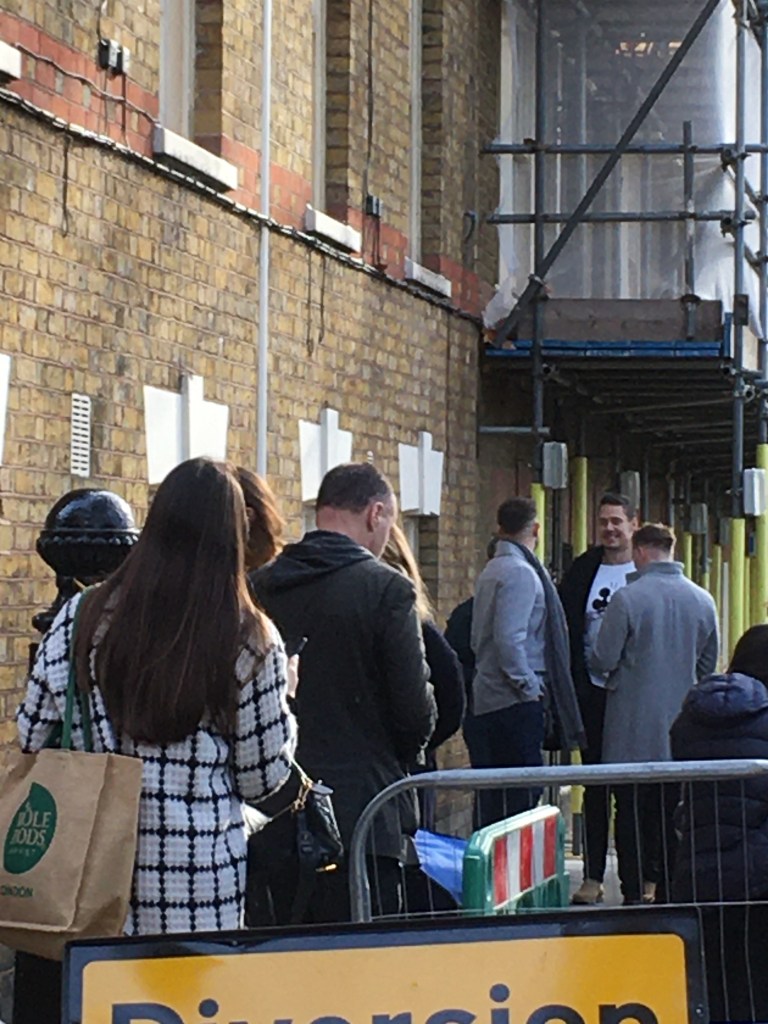
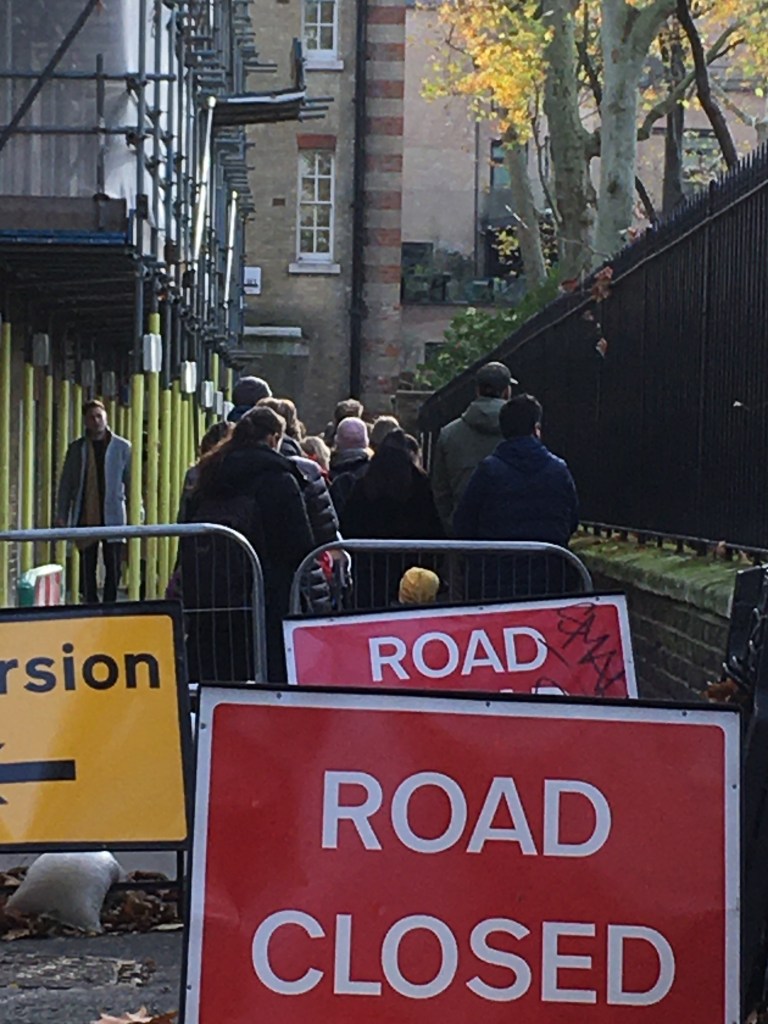
This morning turned out to be a thrilling exception. We decided we’d walk in Marylenone for a change, neither of us being in the mood to commune with nature in a park. We left a dismal, deserted Soho and, behold, as we approached Marylebone High St. ,we were transported to a different world. People scurried along the streets, Crowds queued outside Waitrose – apparently open long before Sunday’s legal 12pm. More crowds queued outside the Ginger Pig butcher, whose huge sausage rolls my husband has been known to buy when supposedly out shopping for groceries, and sit munching in the nearby little park, pubs were open, serving beer to drink on the pavement.We gazed around us as though woken from a dream It was then we came upon the largest queue of all. It snaked round the block and down the road and ended in a Farmer’s Market that used to take place every Sunday in a large car park now too valuable for cars or markets and currently the foundation for a vast block of luxury flats.
But the market had refused to be beaten and had stubbornly migrated into the surrounding area. Stalls thronged side streets, barriers had been erected, marshalls controlled the crowds , letting in only safe numbers for social distancing and families were actually enjoying a day out.
After a brief altercation – or should I say discussion? – “The Writer” gives in to my curiosity and agrees to join the queue. (Normally, he would forgo that which he wants most in the world if the penalty for obtaining it is even five minutes spent queueing. Today, though, even he is forced to admit there is nothing urgent on which he needs to spend his time). And so we join the queue, not sure where it’s heading or how long it will take to get there, not really wanting to shop but wanting to be part of it all, part of the fun. And this once-ordinary, everyday experience has become, because of its scarcity in Lockdown, just that – fun.
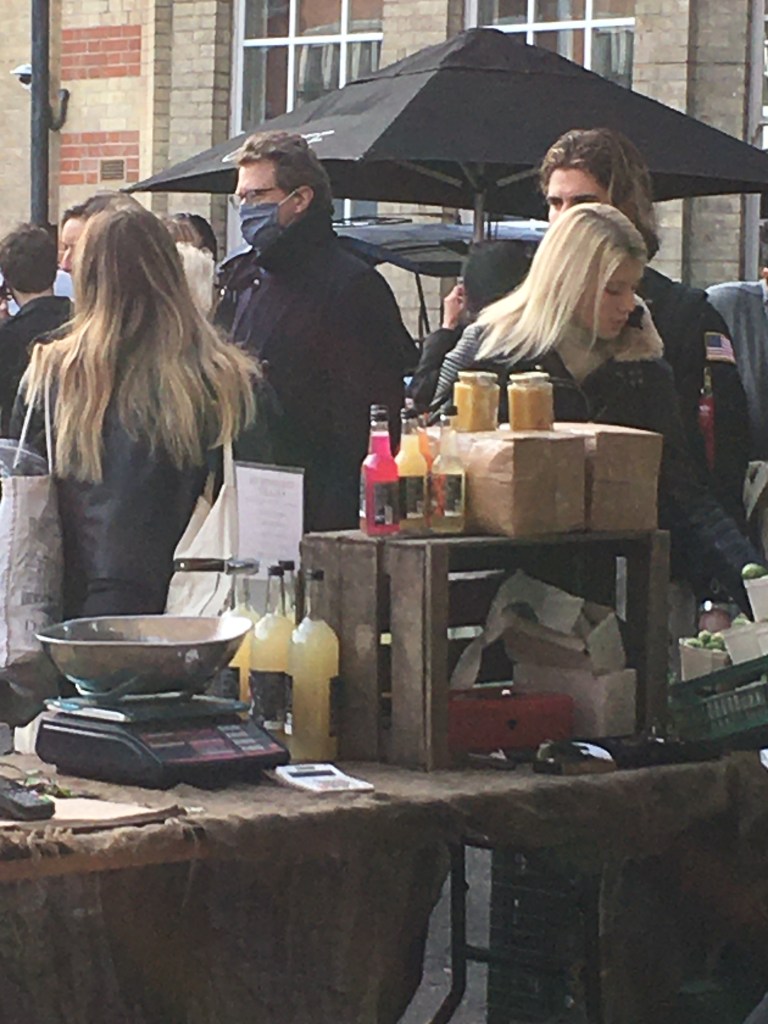
We stroll among the stalls, buy some Bramley apples to satisfy our current baked apple craze, gaze at honey-coloured croissants, olive-studded loaves and palely -glimmering cheeses. Despite only recently having finished breakfast, we know we were not going to resist an unexpected food treat. I station myself at a stall laden with slices of cold pizza. Surely this would be perfect?.
“The Writer” joins me but at once his customary market caution kicks in, born of many disappointments, over many years, in markets up and down the Kingdom. Never buy something at the first stall, is his Mantra. You will rue it before you reach the last, as something better will always turn up and you’ll be too full to enjoy it.
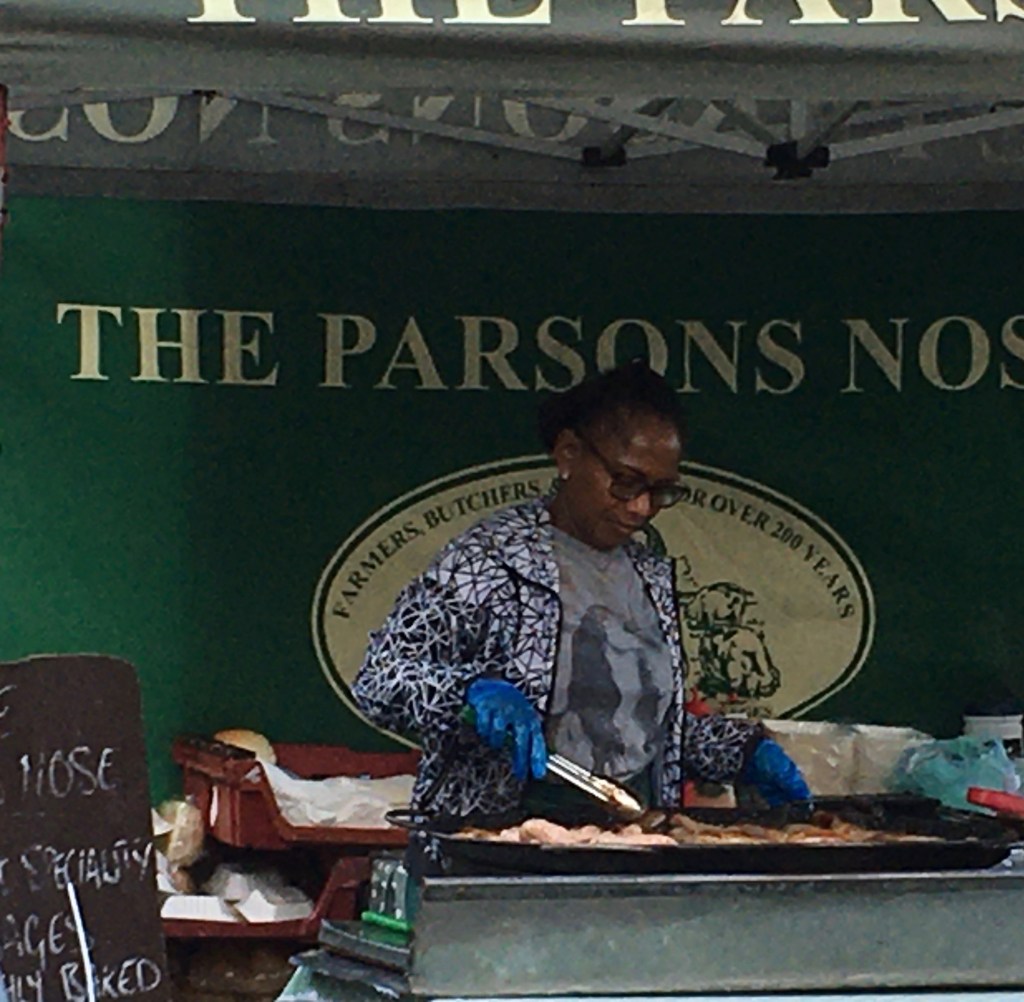
And so, we peer into every stall, inching our way down the street, like detectives seeking a fugitive – until we reach the last one where all his prognostications are justified. We smell it before we see it, The Parson’s Nose, serving fragrant sausages, succulent hamburgers and glistening fried onions, all nestled in soft, white, pillowy rolls. We eat them leaning on some scaffolding with a pile of cladding for a table.
Replete, or should I say stuffed , we head home but only yards from the market, are hit by the thirst that only hot dogs and hamburgers can engender. We pause at the 20-50 coffee shop in Marylebone Lane, buy coffees and sit on a convenient bench nearby, to drink them.
We have walked down this lane a hundred times, sat through evenings and lunches in several of the restaurants that line its streets but as my husband looks down, he spots an extraordinary piece of history that we had managed never to notice, being always intent on the destination and ignoring the journey.
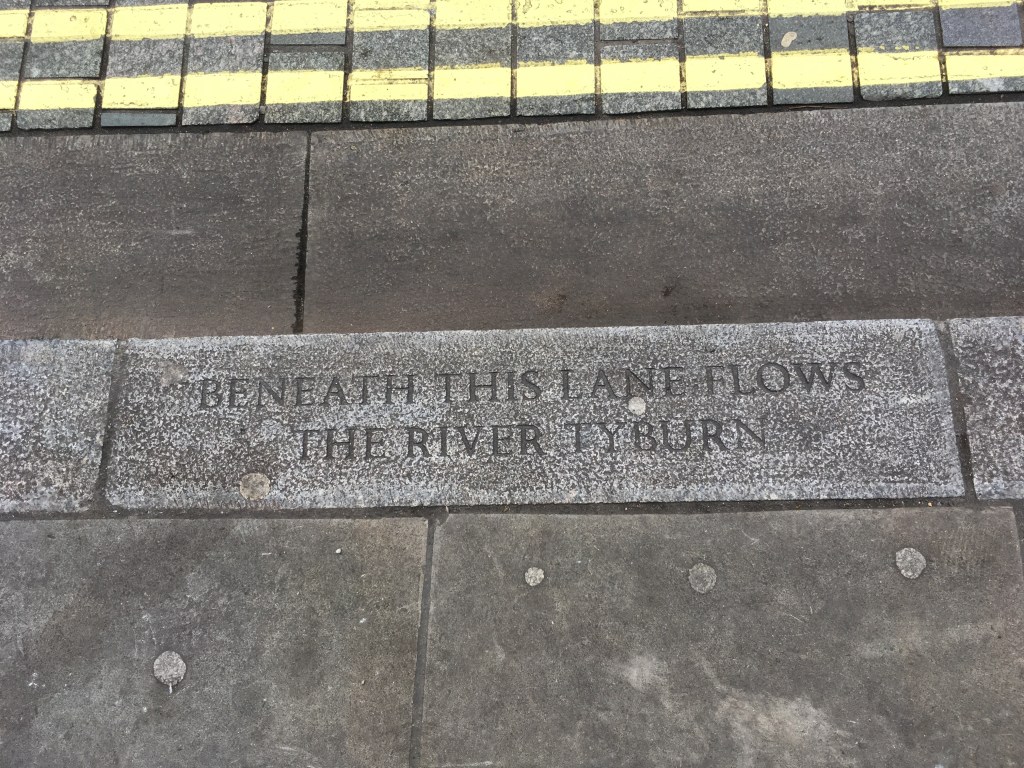
I knew of Tyburn only as London’s grim place of execution, established when Henry V111 was on the throne, to which convicts were brought on carts down what is now Oxford st. through crowds of jeering onlookers who would eagerly follow the cart to Tyburn and stay on to party while enjoying the execution.
Back home and back at my computer, John Roger’s website “Walking London’s Lost Rivers” reveals to me that, to my great surprise, the execution site was named after the Tyburn river, which flowed through the parts of London I love most and in which I have lived for most of my life, completely ignorant of its course.
“The name (of the execution site) is derived from a brook called Tyburn, which flowed down from Hampstead into the Thames, supplying in its way a large pond in the Green Park, and also the celebrated Rosamond’s Pond in St James’s Park. Oxford Street was, at an earlier period, known as Tyburn Road, and the now aristocratic locality of Park Lane, bore formerly the name of Tyburn Lane, whilst an iron tablet attached to the railings of Hyde Park,opposite the entrance of the Edgeware Road, informs the passer-by that here stood Tyburn turnpike-gate, so well known in old times as a landmark by travellers to and from London.”
– The Book of Days Edited by R. Chambers pub. 1888
And there is an unexpected bonus of Lockdown – time “to stand and stare” and explore things we have previously rushed past, busy cramming still more into our already too- crammed lives.
 Locked down in London